

Introduction
Air-purifying plants have moved well beyond a passing trend, becoming a permanent fixture in how people think about healthy, comfortable homes. Heading into 2026, the focus has shifted from simply owning a plant to choosing the right species, placement, and combinations that genuinely support better indoor air and a calmer living environment.
This guide breaks down the air-purifying plants shaping home gardens in 2026, along with practical tips for placing and caring for them so they actually thrive rather than sitting in a corner as decoration.
Why Air-Purifying Plants Remain a Top Home Trend
More people are spending time working from home and paying closer attention to indoor air quality, especially in newer, tightly sealed homes that trap dust, off-gassing from furniture, and everyday pollutants. Plants alone are not a replacement for ventilation or air filtration, but many popular species do help filter certain airborne compounds while also adding humidity and visual softness to a room.
For 2026, the trend leans toward intentional plant choices: fewer random purchases, more research into which species fit a household’s light levels, pet safety needs, and maintenance style.
Top Air-Purifying Plants for 2026
Certain species continue to lead the pack for their combination of resilience and air-filtering reputation.
Popular Air-Purifying Plants for 2026
| Plant | Light Needs | Difficulty Level | Pet-Safe? |
| Snake Plant | Low to bright, indirect | Very easy | No |
| Areca Palm | Bright, indirect | Moderate | Yes |
| Pothos | Low to bright, indirect | Very easy | No |
| Spider Plant | Bright, indirect | Easy | Yes |
| Boston Fern | Bright, indirect, humid | Moderate | Yes |
| Rubber Plant | Bright, indirect | Easy | No |
The Rise of Layered Indoor Jungles
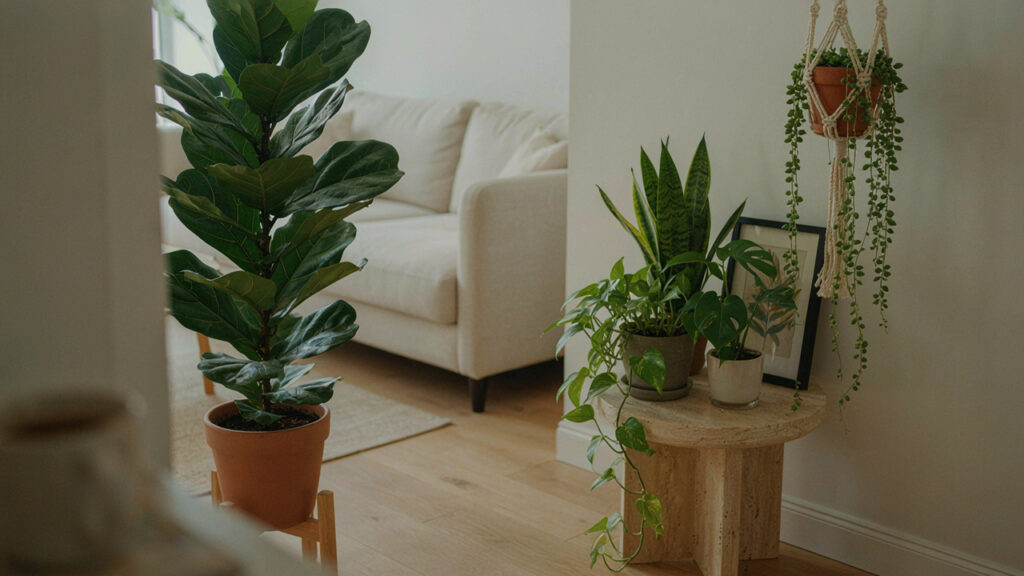
Rather than a single statement plant, 2026 home gardens are leaning into layered groupings: a tall floor plant like an areca palm, a mid-height trailing plant such as pothos on a shelf, and low ground-level plants like ferns or snake plants filling in around them. This layered approach mimics how plants grow in nature and creates a fuller, more immersive green space without necessarily requiring more square footage.
Best Rooms for Air-Purifying Plants
Placement matters as much as plant choice. Bedrooms benefit from low-maintenance, low-light tolerant options like snake plants, which continue releasing oxygen at night. Home offices and living rooms suit larger statement plants that also help soften home-office acoustics and reduce that sterile, all-hardware feel of a workspace.
Bathrooms with a window are well suited to humidity-loving ferns, while kitchens benefit from compact herbs and pothos that tolerate temperature swings near stoves and ovens.
Choosing Plants by Household Needs
Not every trending plant fits every household. Match your choice to your actual lifestyle rather than what looks best on social media.
Matching Air-Purifying Plants to Household Type
| Household Type | Recommended Plants | Why |
| Homes with pets | Areca palm, spider plant, Boston fern | Non-toxic if nibbled |
| Low-light apartments | Snake plant, pothos | Tolerate minimal natural light |
| Busy, low-maintenance owners | Snake plant, ZZ plant | Infrequent watering needs |
| Plant enthusiasts with time | Ferns, rubber plants, layered jungles | Reward regular attention |
Styling Air-Purifying Plants for 2026 Interiors
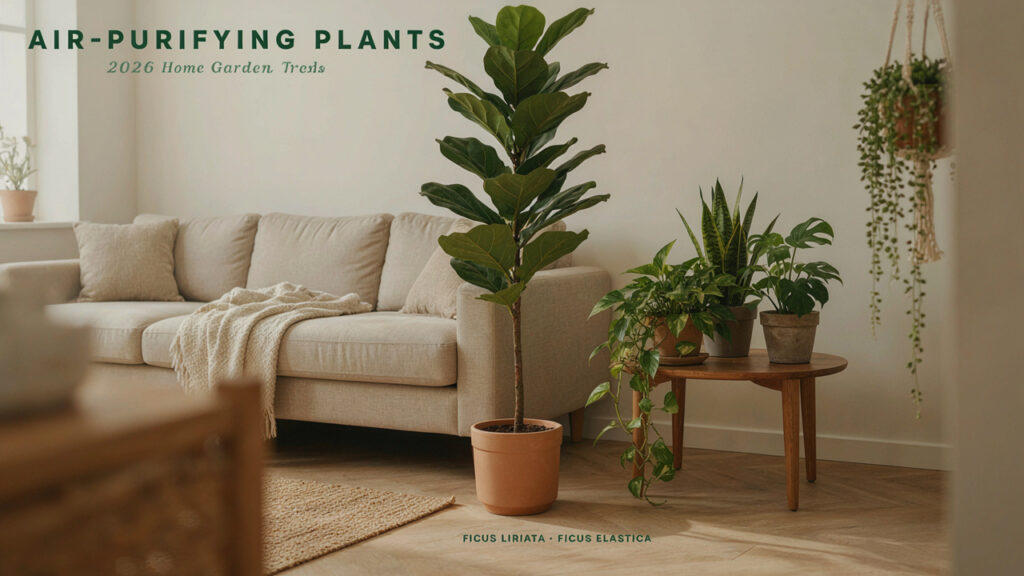
This year’s styling favors natural, textured pots over glossy plastic, think unglazed terracotta, woven baskets, and stone-finish ceramics that echo the broader shift toward warm, organic interiors. Grouping plants of varying heights in a cohesive pot palette creates a designed look rather than a cluttered one, and it makes it easier to spot a struggling plant quickly since it stands out from its neighbors.
Practical Tips
- Choose two or three plant species and repeat them throughout the home rather than collecting many single specimens, for a more cohesive, intentional look.
- Clean leaves regularly with a damp cloth, since dust buildup reduces both a plant’s appearance and its ability to photosynthesize effectively.
- Avoid clustering plants directly against exterior walls in winter, where temperatures can drop lower than the rest of the room.
- Check each plant’s actual light requirement before placement rather than assuming all air-purifying plants tolerate low light equally well.
- Rotate pots occasionally to prevent one-sided growth toward the nearest light source.
Frequently Asked Questions
Do air-purifying plants really improve indoor air quality?
Plants can help filter certain airborne compounds and add humidity, but they work best alongside good ventilation rather than as a standalone air quality solution.
How many air-purifying plants do I need per room?
There is no strict number, but a general guideline is one medium to large plant per 100 square feet for a noticeable presence and benefit.
What is the easiest air-purifying plant for beginners in 2026?
Snake plants and pothos remain the top choices for beginners due to their tolerance for irregular watering and low light conditions.
Are air-purifying plants safe for homes with cats and dogs?
Not all are; snake plants and pothos are mildly toxic if ingested, so pet owners should choose alternatives like spider plants, areca palms, or Boston ferns.
What is trending in air-purifying plant styling for 2026?
Layered indoor jungles with varied plant heights, plus natural textured pots like terracotta and woven baskets, are leading this year’s styling trend.
Can air-purifying plants survive in a low-light bedroom?
Yes, snake plants and pothos in particular tolerate low light well and are popular choices for bedrooms since they continue releasing oxygen at night.
Conclusion
The 2026 approach to air-purifying plants is less about chasing trends and more about building a thoughtful, layered indoor garden suited to your actual home and lifestyle. Whether you are furnishing a pet-friendly living room, a low-light apartment, or a busy household with little time for fuss, there is a reliable air-purifying plant to match.
Start with one or two well-suited species, learn their care rhythm, and expand from there for a home that feels greener, calmer, and genuinely healthier.