
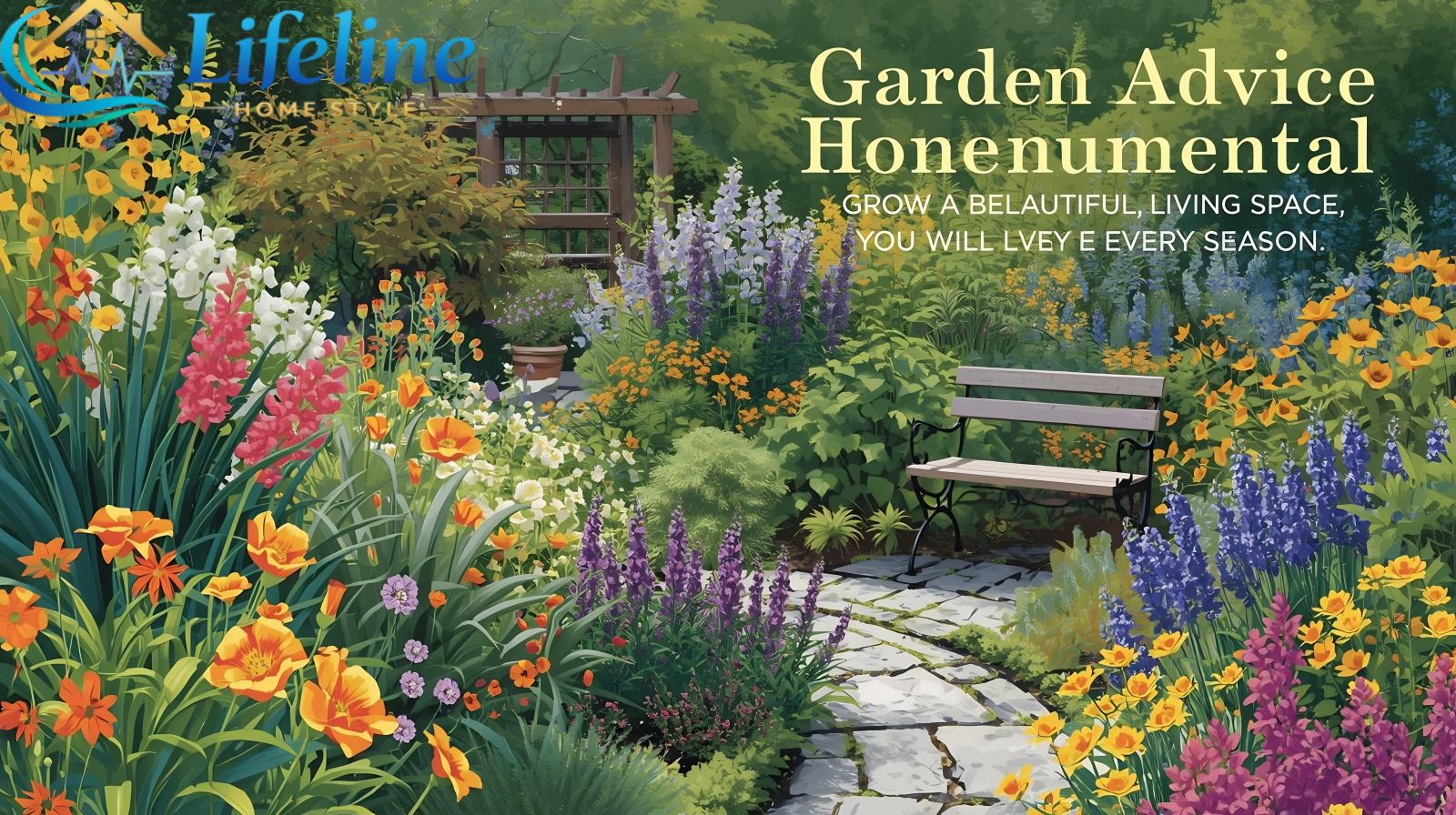

A garden is not just an outdoor space. It is a living, breathing extension of your home one that changes with every season, rewards patience, and returns care with extraordinary beauty. Whether you have a large country garden, a modest urban backyard, or a single balcony with a few pots, the principles of good gardening are the same: understand your space, work with nature rather than against it, and give your plants what they genuinely need.
At Homenumental, we believe that every outdoor space holds the potential for transformation. You do not need decades of experience or an enormous budget. You need the right knowledge, applied consistently and with genuine attention. This guide gives you exactly that clear, practical garden advice from first principles to seasonal routines, covering soil, planting, design, and the quiet habits that keep a garden thriving all year long.
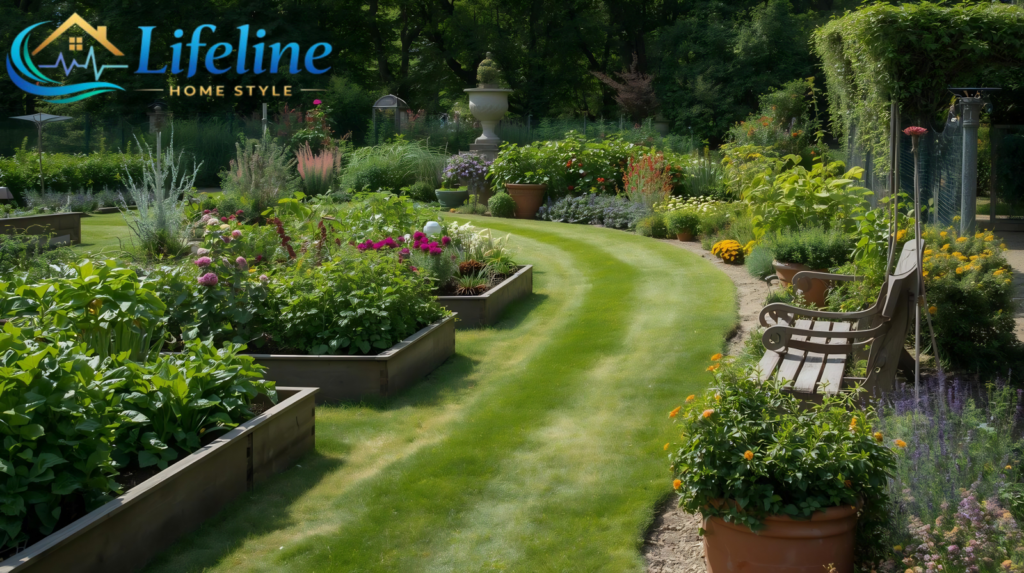
Start with the Soil Your Garden’s Foundation
Every good garden begins below the surface. Soil is not simply dirt it is a complex, living system of minerals, organic matter, moisture, and microorganisms that determines what you can grow and how well. Before buying a single plant, understand your soil. The four most important things to know are its texture, its drainage, its pH, and its fertility.
Soil texture describes the proportion of sand, silt, and clay. Sandy soils drain quickly but dry out fast and hold few nutrients. Clay soils retain moisture and nutrients well but compact easily and drain poorly. The ideal soil loam — balances all three and is what most good gardeners work toward over time. The consistent, transformative solution for almost any soil type is the same: organic matter. Compost, well-rotted manure, leaf mould, and green waste dug into your beds year after year steadily improve drainage in clay, water retention in sand, and nutrient availability in both.
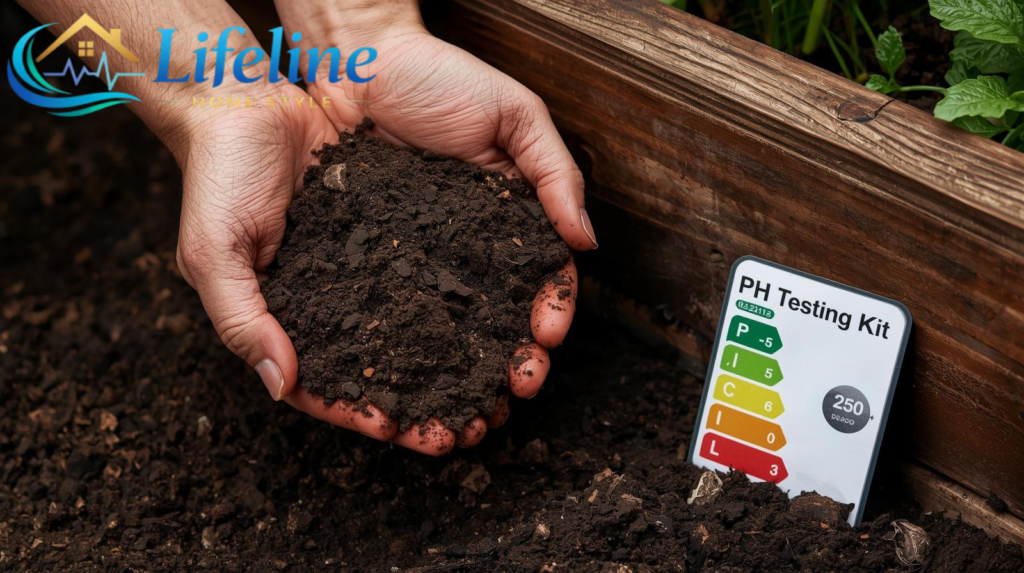
- Test your soil pH: Most vegetables and flowers prefer a slightly acidic to neutral pH of 6.0–7.0. Simple test kits cost $5–$10. Lime raises pH; sulphur lowers it.
- Feed the soil, not just the plant: Healthy, biologically active soil grows healthy plants naturally. Add compost every season and let the worms and microbes do the rest.
- Never compact wet soil: Walking on wet clay destroys its structure. Always work from boards or stepping stones when the ground is wet.
- Mulch every bed: A 5–7cm layer of bark mulch, straw, or leaf mould conserves moisture, suppresses weeds, and feeds the soil as it breaks down. It is one of the highest-return habits in all of gardening.
Homenumental Garden Tip: The single best investment you can make in any garden is a compost bin. Kitchen and garden waste transformed into compost over 3–6 months is more valuable than anything you can buy in a bag. Start one this week your soil will show the difference within a single growing season.
Know Your Light: The Factor That Decides Everything
Plants need light as fundamentally as they need soil and water. Planting a shade-lover in full sun or a sun-lover under a tree are the most common causes of garden failure, and both are entirely avoidable. Before planning any planting scheme, observe your garden through a full day at different times of year. Note where direct sun falls for more than 6 hours this is full sun. Where sun reaches for three to 6 hours is partial shade. Where trees, buildings, or walls reduce sunlight to under three hours is full shade.
- Full sun (6+ hours direct): Roses, lavender, tomatoes, most herbs, dahlias, and the majority of flowering perennials.
- Partial shade (3–6 hours): Ferns, hostas, astilbe, hydrangeas, most salad leaves, and many spring bulbs.
- Full shade (under 3 hours): Ferns, ivy, hellebores, lily of the valley, and shade-tolerant ground covers like vinca.
✦ Homenumental Garden Tip: North-facing gardens and shaded urban yards are not limitations — they are invitations to work with a specific palette of beautiful shade-tolerant plants that most gardeners never explore. Ferns, hostas, astilbe, and hellebores create extraordinarily beautiful shade gardens.
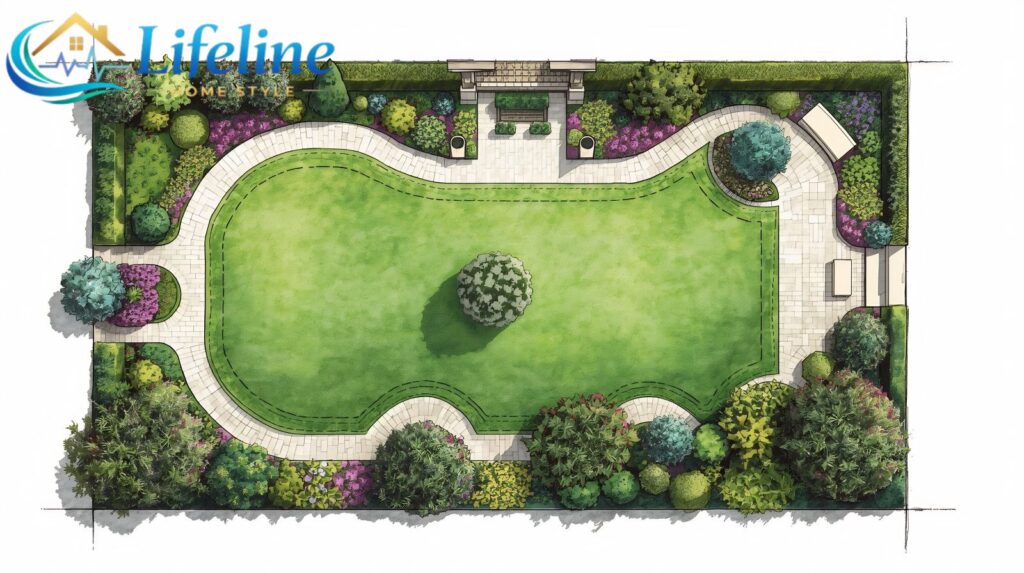
Great garden design follows the same principles as great interior design: intention, proportion, layering, and restraint. A garden without a clear design intention is a collection of plants. A garden with intention is a space that draws you in, moves you through it, and rewards you at every turn.
Begin with the structure. In garden design, structure refers to the permanent or semi-permanent elements that define the garden’s shape and give it its character in every season — paths, lawn edges, hedges, walls, trees, and large shrubs. These are the bones of the garden, and they are more important than any collection of flowering plants. A garden with strong bones looks beautiful even in winter, when nothing is in flower. A garden without bones looks shapeless and incomplete even in the height of summer.
- Paths create journey and purpose: A winding path through a garden creates mystery and movement. A straight path creates drama and formality. Both work — the choice depends on the character you want to create.
- Repetition creates rhythm: Repeating a plant, a material, or a form at intervals through the garden creates visual cohesion and the sense that the space was designed rather than assembled.
- Layer heights deliberately: Combine tall background plants (grasses, shrubs, roses), mid-height structural plants (salvias, dahlias, nepeta), and low front-of-border plants (thyme, alyssum, sedums) for depth and visual interest.
- Leave space to breathe: Over-planted gardens look fussy and tired within two seasons. Plant at recommended spacings and allow the garden to fill over time.
- Connect the house to the garden: Use the same or complementary materials in hard landscaping that appear in the house. Repeat the indoor colour palette in pots and borders near the house. This visual continuity makes the garden feel like a true extension of the home.
✦ Homenumental Garden Tip: Before buying a single plant for a redesign, sketch your garden on paper and identify the three or four structural anchors — a tree, a hedge, a large shrub, a focal object. Plant these first and build everything else around them. This is how professional garden designers work.
Planting for Beauty and Biodiversity
The plants you choose define the garden’s character, its colour, its fragrance, its wildlife value, and the amount of maintenance it requires. The Homenumental planting philosophy prioritises plants that offer multiple seasons of interest, support biodiversity, and reward low-intervention care. We are drawn to plants that are beautiful, generous, and resilient — plants that look after themselves once established, that feed the bees and butterflies without being asked, and that contribute to the garden’s atmosphere for more than a few weeks of the year.
| Plant | Season | Why We Love It | Best For |
| Lavender | Summer | Fragrant, bee magnet, drought-tolerant | Borders, pots, path edges |
| Nepeta (Catmint) | Spring–Autumn | Soft blue, long-flowering, self-seeds gently | Border front, edging |
| Salvia nemorosa | Early summer | Upright purple spikes, pollinators love it | Mid-border structure |
| Echinacea | Late summer | Bold colour, long seedheads for birds | Prairie-style borders |
| Allium | Late spring | Architectural globe flowers, easy to grow | Mixed borders, cutting |
| Persicaria | Summer–Autumn | Weed-smothering groundcover with pink spikes | Large beds, slopes |
| Hellebore | Winter–Spring | Flowers when nothing else does | Shade borders |
| Verbena bonariensis | Summer–Autumn | Tall, transparent, pollinators adore it | Back of border, gravel |
| Stipa tenuissima | Year-round | Feathery movement, catches the light | Modern, naturalistic gardens |
| Hydrangea paniculata | Late summer | Large creamy plumes, easy and reliable | Shrub borders, pots |
A garden is never the same twice. It changes with every season, every week, every day — and the gardener’s job is to work with that rhythm rather than against it. The most productive and enjoyable gardeners I know are not necessarily the most skilled; they are the ones who show up consistently, who learn to read their garden’s signals, and who understand that every season has its non-negotiable tasks and its irreplaceable pleasures.
Spring: Prepare, Plant, and Begin
- Clear winter debris: Remove dead stems, fallen leaves, and any frost-damaged material from borders. Cut back ornamental grasses to a hand’s width above the ground.
- Feed borders: Apply a slow-release general fertiliser or a generous layer of compost across all planted beds. Do this before new growth fully emerges.
- Start seeds indoors: Tomatoes, peppers, aubergines, and half-hardy annuals like dahlias all need an early start under cover. Start from late February to April depending on your climate.
- Plant summer bulbs: Dahlias, gladioli, and cannas go in once soil temperature reaches 10°C — typically April in temperate climates.
- Edge lawn borders: Clean, crisp lawn edges do more for a garden’s appearance than almost any planting choice. A simple half-moon edger and 20 minutes transforms the look of the whole space.
Summer: Maintain, Water, and Enjoy
- Water deeply and infrequently: Deep, infrequent watering encourages roots to go down in search of moisture, creating more drought-resilient plants. Frequent, shallow watering creates surface-rooting plants that suffer in dry spells.
- Deadhead spent flowers: Removing finished flowers on most annuals and many perennials encourages the plant to produce more blooms rather than setting seed. Deadhead roses, dahlias, and bedding plants weekly.
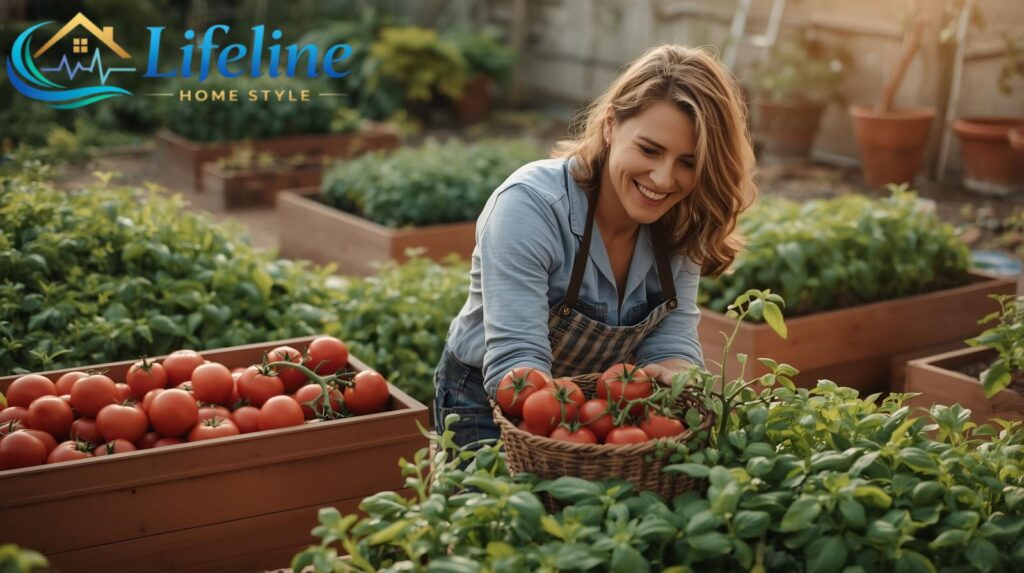
- Harvest herbs and vegetables regularly: Regular picking keeps production going. A courgette left too long becomes a marrow; basil not pinched becomes leggy. Harvesting is maintenance.
- Watch for pests: Check the undersides of leaves for aphids and caterpillar eggs. Address early with a strong water spray or neem oil solution rather than waiting for a full infestation.
- Keep planting: Gaps left by spring bulbs can be filled with late annuals, tender perennials, or additional dahlias through June and early July.
Autumn: Harvest, Plant, and Prepare
- Plant spring bulbs: September to November is bulb season. Tulips, daffodils, alliums, hyacinths, and crocus all go in now for a spring display. The simple rule: plant at two to three times the bulb’s depth.
- Divide overcrowded perennials: Clumps of perennials that have grown too large can be lifted, split, and replanted — or shared with neighbours. Do this in early autumn before the ground cools.
- Collect and compost: Fallen leaves become leaf mould within 12 months. Bag them, make holes in the bags, and leave in a corner. In a year they become the finest soil amendment available.
- Plant evergreen hedging: Autumn is ideal for planting bare-root hedging. Yew, hornbeam, box, and beech all establish well when planted in autumn rains.
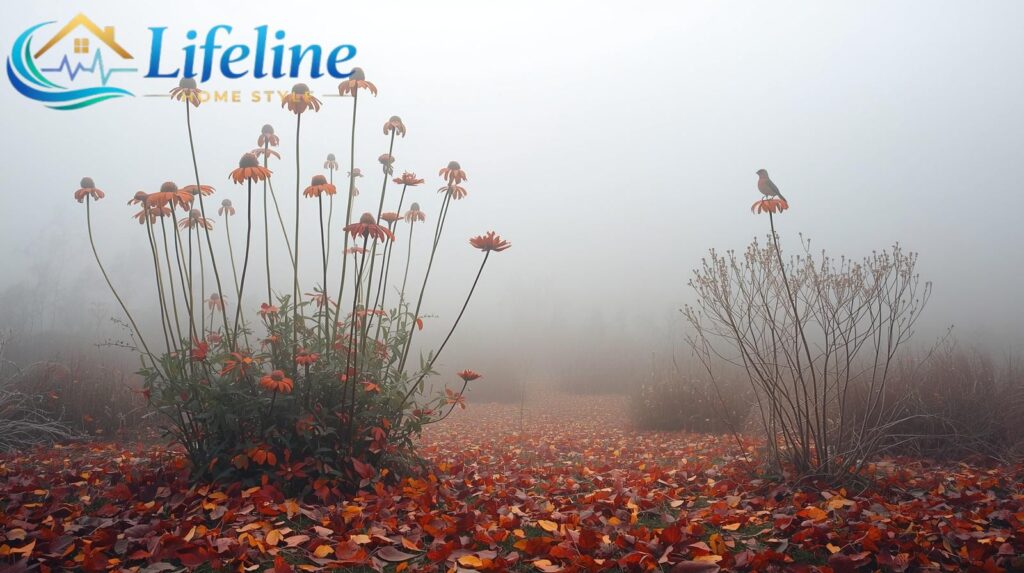
- Leave seedheads standing: Resist the urge to cut everything back. Seedheads of echinacea, verbena, teasels, and grasses provide food for birds through winter and look extraordinary covered in frost.
Winter: Rest, Plan, and Repair
- Protect tender plants: Dahlias, cannas, and other tender perennials need to come indoors or be covered with a thick mulch of straw or bark. Terracotta pots should be moved under cover or wrapped to prevent frost cracking.
- Plan next year: Winter is the gardener’s thinking season. Review what worked, what failed, what you want to change. Order seeds from specialist nurseries before the best varieties sell out — often by February.
- Repair and maintain tools: Clean, sharpen, and oil all metal tools. Replace any broken handles. Properly maintained tools last a lifetime and make every gardening task genuinely easier.
- Prune fruit trees and wisteria: Deciduous fruit trees and wisteria should be pruned in winter while fully dormant. Remove crossing branches, dead wood, and anything that crowds the centre.
The Low-Maintenance Garden Work Smarter, Not Harder
The best-kept gardening secret is that low-maintenance gardens are not less beautiful than high-maintenance ones — they are simply designed and planted more intelligently. The gardeners who spend the least time weeding, watering, and fighting pests are not the laziest ones. They are the ones who made better decisions at the beginning: choosing the right plants for the right conditions, building healthy soil that supports plant health naturally, and designing spaces that work with natural processes rather than against them.
- Right plant, right place: A plant growing in conditions that suit it naturally needs almost no intervention. A plant fighting its environment needs constant help. This is the master principle of low-maintenance gardening.
- Mulch every bed every year: Mulching is the single most time-saving garden practice available. It suppresses weeds, retains moisture, reduces watering frequency, and feeds the soil simultaneously.
- Choose perennials over annuals: Perennials return every year from the same root system. Once established, they require a fraction of the time and cost of annual bedding plants.
- Use ground-covering plants in large areas: Dense, low-growing plants like hardy geraniums, vinca, persicaria, and ajuga crowd out weeds by covering the soil completely. A well-planted ground-cover scheme replaces hours of weeding.
- Install a simple irrigation system: Drip irrigation or soaker hoses on a timer can be installed in a single afternoon for under $60. They eliminate the most time-consuming summer garden task while watering more effectively than hand watering.
- Accept naturalistic aesthetics: A garden planted in a naturalistic style — grasses, seedheads, self-seeders, and pollinator plants — requires far less intervention than a formal garden and creates an ecological richness that is genuinely beautiful.
✦ Homenumental Garden Tip: Spend 15 minutes in your garden every day rather than three hours once a week. Daily attention catches problems before they grow, keeps maintenance tasks manageable, and — most importantly — keeps you in close relationship with your garden’s rhythms. The gardeners with the most beautiful gardens are almost always the ones who show up every day, even if only briefly.
| Problem | Likely Cause | Homenumental Solution |
| Yellow leaves | Overwatering or nutrient deficiency | Check drainage; apply balanced liquid feed |
| Leggy, pale growth | Insufficient light | Move to brighter position; thin surrounding plants |
| Wilting despite water | Root rot from waterlogged soil | Improve drainage; add grit; reduce watering |
| Persistent weeds | Bare soil and weed seed germination | Mulch deeply; use ground-cover plants |
| No flowers on roses | Over-feeding with nitrogen; pruning error | Switch to potassium-rich feed; prune to outward bud |
| Aphid infestation | Soft growth, often in sheltered spots | Strong water spray; introduce ladybirds; neem oil |
| Poor fruiting | Insufficient pollination or nutrients | Improve bee habitat; feed with potash in spring |
| Lawn moss | Poor drainage, compaction, low fertility | Aerate with fork; top-dress with sharp sand; overseed |
Q: What is the most important thing I can do to improve my garden?
A: Improve your soil. Every other gardening intervention — fertilising, watering, pest control — works better in healthy, biologically active soil. Add compost or well-rotted manure to every bed, every year, without exception. Within two or three seasons, the improvement in plant health, growth, and yield will be remarkable. Good soil grows good gardens. Everything else follows from that.
Q: How do I start a garden from scratch?
A: Begin with observation. Spend a full season watching your space before making major changes — noting where light falls, where water collects, which areas are sheltered and which are exposed. Then establish your structure: paths, borders, and lawn areas. Improve the soil in your beds. Plant your structural anchors — trees, large shrubs, hedges — and build your planting scheme around them. Patience in the first year pays extraordinary dividends in every subsequent year.
Q: Which plants are best for a beginner?
A: Start with plants that are genuinely forgiving: lavender, salvia, nepeta, and geraniums for borders; nasturtiums, zinnias, and sunflowers from seed; courgettes, salad leaves, and radishes for vegetables. These plants establish easily, require minimal intervention, and deliver visible results quickly. Success with easy plants builds the confidence and knowledge to tackle more demanding ones.
Q: How do I make a small garden feel bigger?
A: Use vertical space — climbers on walls and fences, tall grasses and perennials, trained fruit trees and espaliers all draw the eye upward and create the impression of height and depth. Use mirrors — a garden mirror on a fence or wall reflects light and creates the illusion of a space beyond. Create layers from front to back — low planting at the front, medium in the middle, tall at the back. And resist the urge to clutter: a small garden with a few well-chosen, well-placed plants feels more spacious and more considered than one packed with too many things.
Q: How often should I water my garden?
A: Water deeply and infrequently rather than little and often. Most established garden plants benefit from one deep watering per week in dry weather rather than daily light watering. Deep watering encourages roots to grow downward toward moisture, creating more resilient plants. The best time to water is early morning — before the heat of the day causes evaporation. Vegetables in peak growing season and plants in containers will need more frequent attention.
Grow with Patience. Design with Intention. Garden with Joy.
- A: Gardening is one of the oldest and most deeply satisfying human practices. It connects us to the cycles of the natural world, teaches patience and observation, and returns our care with a generosity that no other creative pursuit quite matches. A seed becomes a plant. A plant becomes a border. A border becomes a garden. A garden becomes a place that changes how you feel when you step outside in the morning.

The advice in this guide is not a formula for a specific look or a rigid programme to follow. It is a set of principles that, applied with intelligence and care, will help any garden in any space, at any budget, in any climate become something more beautiful, more alive, and more deeply yours. Start with the soil. Learn your light. Design with structure. Plant with generosity. Tend with consistency. And allow yourself the pleasure of not knowing exactly what will happen next because that, more than anything else, is what keeps gardeners gardening.
Grow beautifully Homenumental