
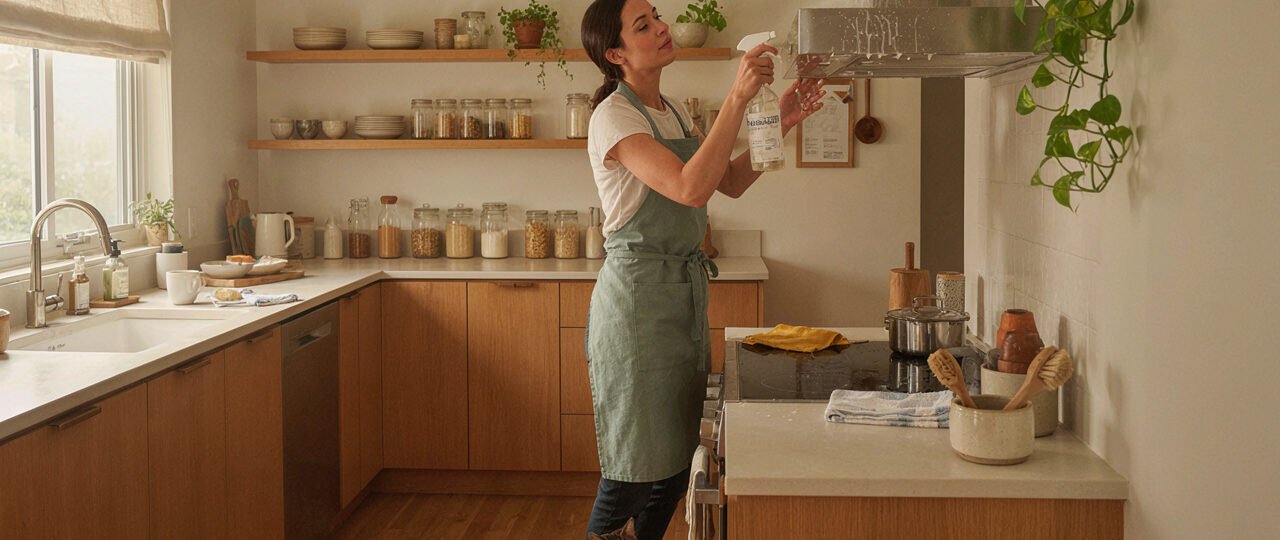

A clean kitchen is important for both the appearance and everyday comfort of your home. However, regular cleaning does not always remove the grease, dirt, food residue, and grime that gradually build up on surfaces and appliances.
A proper deep cleaning kitchen routine focuses on areas that are often missed during daily cleaning. This includes cabinets, appliances, walls, floors, sinks, and hard-to-reach spaces.
This step-by-step guide explains how to deep clean a kitchen efficiently and safely, helping you remove built-up grease and grime while keeping your space fresh and organized.
1. Prepare Your Kitchen Before Deep Cleaning
Before starting your deep cleaning kitchen routine, remove unnecessary items from countertops and clear the areas you plan to clean.
Start by gathering basic cleaning supplies suitable for your kitchen surfaces. Depending on your needs, you may use:
- Microfiber cloths
- Sponges
- A soft cleaning brush
- Warm water
- Dishwashing liquid
- A suitable kitchen surface cleaner
- Baking soda for gentle scrubbing where appropriate
- Gloves
Always check the manufacturer’s care instructions before using a cleaning product on appliances, stone countertops, wood, or other delicate materials.
Once the counters are clear, begin from the upper areas of the kitchen and work downward. This helps prevent dust and dirt from falling onto surfaces you have already cleaned.
2. Remove Grease and Dirt from Kitchen Cabinets
Kitchen cabinets can collect grease, fingerprints, and dust, especially around handles and areas close to the stove.
Begin by removing loose dust with a dry or slightly damp microfiber cloth. Then clean the cabinet surfaces using a suitable cleaner for the cabinet material.
Pay extra attention to:
- Cabinet handles
- Areas around the stove
- Cabinet edges
- Doors near cooking surfaces
- Corners where dirt collects
Avoid soaking wooden cabinets with excessive water, as moisture can damage certain finishes.
For stubborn grime, use gentle cleaning methods and avoid aggressive scrubbing that could damage paint or protective coatings.
Cleaning cabinets is an important part of any deep cleaning kitchen routine because these surfaces can accumulate grease slowly and become easy to overlook.
3. Deep Clean the Stove and Cooking Area
The stove is often one of the dirtiest areas in the kitchen because of regular cooking, food spills, and grease.
Allow the stove to cool completely before cleaning it. Remove detachable parts according to the manufacturer’s instructions and clean them separately.
Use a cleaner suitable for your stove surface. For dried food residue, allow an appropriate cleaning solution to sit briefly before wiping rather than immediately scrubbing aggressively.
Clean the following areas carefully:
- Burners or heating surfaces
- Stove controls
- The area behind and beside the stove
- Grease splatters on nearby walls
- Range hood surfaces
The range hood and filter may also collect grease. Follow the appliance manufacturer’s instructions for cleaning or replacing filters.
Regular attention to the cooking area can make future deep cleaning easier.
4. Clean Kitchen Countertops and Backsplashes
Different countertop materials require different cleaning methods. Before using a cleaning product, make sure it is suitable for your surface.
For daily dirt and food residue, a gentle cleaner and a clean cloth are often enough.
Pay attention to:
- Areas around small appliances
- Corners and edges
- Spaces near the sink
- Backsplashes behind the stove
- Grout lines where applicable
Do not use abrasive materials on surfaces that can scratch easily.
After cleaning, wipe away excess moisture and dry the surface with a clean cloth when appropriate.
A clean countertop instantly makes a kitchen look more organized and refreshed.
5. Deep Clean the Refrigerator
The refrigerator should be cleaned regularly to remove spills, old food residue, and odors.
Start by removing food items. Check expiration dates and dispose of food that is no longer suitable to keep.
Remove shelves and drawers if the appliance instructions allow it. Clean them according to the manufacturer’s recommendations and allow them to dry completely before returning them to the refrigerator.
Wipe down:
- Interior walls
- Shelves
- Drawers
- Door compartments
- Handles
- Exterior surfaces
Once the refrigerator is clean, organize food into logical sections. This can make it easier to find items and reduce future spills.
6. Deep Clean the Microwave and Other Small Appliances
Small appliances can collect food residue and grease over time.
For a microwave, follow the manufacturer’s cleaning instructions. Remove loose crumbs and food particles, then wipe the interior using a suitable method for the appliance.
Also clean:
- The microwave door
- Control panel
- Exterior surfaces
- Handles
Do not forget appliances such as toasters, coffee makers, blenders, and other frequently used equipment.
Unplug appliances before cleaning external electrical areas where appropriate, and avoid allowing excess liquid near electrical components.
Keeping appliances clean can improve the overall appearance of your kitchen and prevent old residue from building up.
7. Deep Clean the Kitchen Sink and Drain Area
The sink is used constantly and can collect food particles, soap residue, and general dirt.
Remove dishes and clear the sink completely before cleaning.
Clean the sink using a product suitable for its material. Pay attention to the corners, edges, faucet base, and drain area.
Also wipe:
- The faucet
- Handles
- The area behind the faucet
- The sink strainer
- Nearby countertop edges
Avoid mixing different cleaning chemicals. Some combinations can create dangerous fumes or reactions.
After cleaning, rinse the sink thoroughly where required and dry it with a clean cloth.
8. Clean Kitchen Floors and Hard-to-Reach Areas
Floors can collect crumbs, grease, dust, and dirt throughout the day.
Begin by sweeping or vacuuming to remove loose debris. Then use a floor cleaner suitable for your flooring material.
Do not forget to clean:
- Under movable furniture
- Around the refrigerator
- Under the stove where accessible
- Along baseboards
- Corners
Use only the amount of water appropriate for your flooring type. Excess water can damage some surfaces.
Working from one side of the kitchen toward the exit can help prevent walking over freshly cleaned areas.
9. Organize Your Kitchen After Deep Cleaning
Once the cleaning is complete, take a few minutes to organize the items you return to your kitchen.
Store frequently used items where they are easy to reach and keep rarely used equipment in less accessible storage areas.
Consider grouping similar items together, such as:
- Baking supplies
- Cooking utensils
- Food storage containers
- Spices
- Cleaning supplies
Organization can make your kitchen easier to use and simplify future cleaning.
Avoid returning unnecessary items to the countertops. Keeping surfaces relatively clear can make the kitchen feel cleaner and more spacious.
How Often Should You Deep Clean a Kitchen?
The ideal schedule depends on how often you cook and how many people use the kitchen.
High-use areas, such as countertops and sinks, usually need frequent regular cleaning. Less visible areas, including cabinets, appliances, and spaces behind furniture, may need attention less often.
A practical approach is to include small cleaning tasks in your regular routine. This reduces the amount of work required when it is time for a full deep cleaning kitchen session.
Deep Cleaning Kitchen Checklist
Use this checklist when planning your next kitchen deep clean:
- Clear countertops and remove unnecessary items
- Clean cabinets and handles
- Deep clean the stove and cooking area
- Wipe countertops and backsplashes
- Clean the refrigerator
- Clean the microwave and small appliances
- Wash and wipe the sink area
- Sweep or vacuum the floor
- Mop with a suitable floor cleaner
- Clean hard-to-reach areas
- Organize kitchen storage
Final Thoughts
A successful deep cleaning kitchen routine is about more than making visible surfaces look clean. It also involves removing built-up grease, dirt, food residue, and grime from areas that may be missed during everyday cleaning.
By working systematically from cabinets and appliances to countertops, sinks, and floors, you can make the process more manageable.
Start with one area at a time, use cleaning products that are suitable for each surface, and follow appliance care instructions whenever necessary.
With regular maintenance and occasional deep cleaning, your kitchen can remain cleaner, fresher, and more comfortable for everyday cooking and family life.