

Interior design is one of those disciplines that looks effortless when done well — but the reality is that every beautifully designed room is the result of deliberate decisions about colour, proportion, light, texture, and purpose. The good news is that great interior design is not an innate talent reserved for professionals. It is a skill, and like any skill, it can be learned, practised, and continuously improved.
At MintpalDecor, we believe that understanding the core principles of interior design unlocks the ability to create spaces that feel not just beautiful, but genuinely right — balanced, functional, personal, and alive. Whether you are decorating your first apartment, renovating a family home, or simply trying to refresh a tired room, the fifteen principles in this guide will elevate your design thinking and your results.
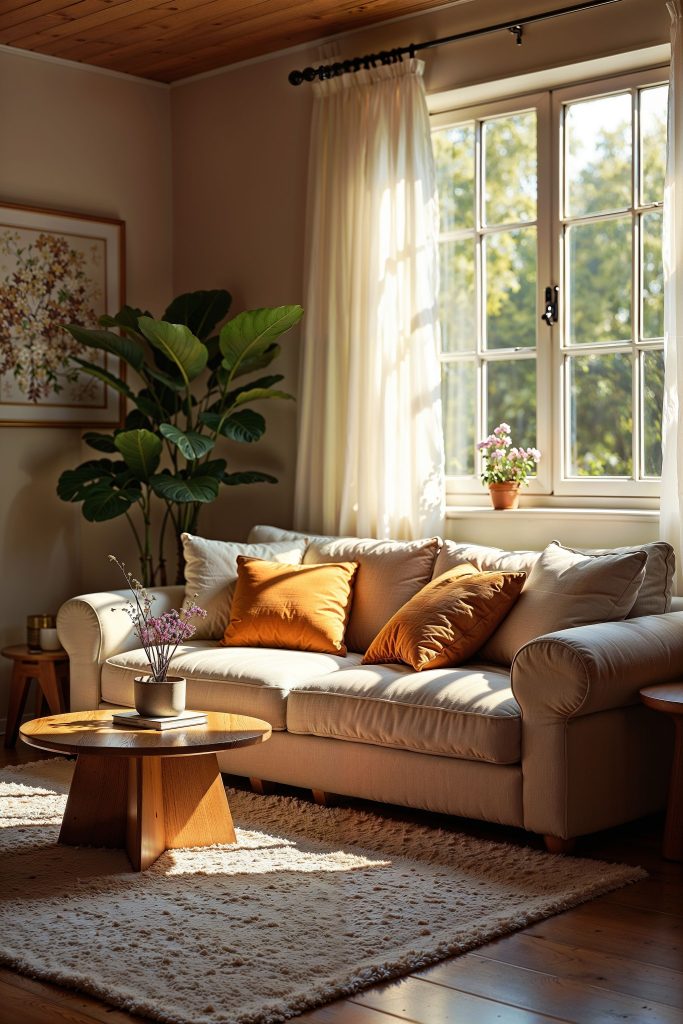
Why Learning Interior Design Principles Changes Everything
Most people decorate reactively — they buy furniture they like, paint walls a colour they have seen somewhere, and arrange things where they fit. The result is a room that works but never quite feels right. Something is always slightly off, slightly too much, or slightly missing.
Interior design principles give you a framework to understand why certain spaces feel wonderful and others feel uncomfortable. They explain the relationship between scale and proportion, the psychology of colour, the role of layered lighting, and the power of negative space. Once you understand these principles, you stop guessing and start designing with intention — and that is when rooms truly transform.
- Design with intention: Every element in a well-designed room has a reason for being there. Nothing is random.
- Understand what you like and why: Good designers study spaces they admire and analyse the principles at work.
- Create spaces that serve people, not just look good: The best interiors are both beautiful and deeply functional for the people living in them.
- Build a consistent visual language: Great rooms tell a coherent story through consistent colour, material, and stylistic choices.
Mintpaldecor Principles 1–5 the Foundation of great design
RULE 1: Master Colour Theory First — Colour is your most powerful design tool and the starting point of every successful interior.
Colour affects mood, perceived room size, and the emotional atmosphere of a space more than any other design element. Understanding basic colour theory — the relationships between warm and cool tones, complementary and analogous colour schemes, and the psychological effects of different hues — is the most important foundation skill in interior design.
- Warm colours (reds, oranges, yellows): Create energy, intimacy, and warmth. Ideal for social spaces like dining rooms and living rooms.
- Cool colours (blues, greens, purples): Create calm, spaciousness, and relaxation. Ideal for bedrooms and bathrooms.
- Neutrals (whites, greys, beiges, taupes): The backbone of most interiors — they provide breathing room and let other elements shine.
- The 60-30-10 rule: 60% dominant colour (walls/large furniture), 30% secondary colour (sofas, curtains), 10% accent colour (cushions, artwork, accessories). This formula creates balanced, professional-looking rooms every time.
💡 MINTPALDECOR TIP: Before painting, always test your chosen colour in a large swatch (at least A3 size) on the actual wall and observe it at different times of day and in different lighting conditions. Paint colours shift dramatically between morning, afternoon, and artificial light.
RULE 2: Understand Scale and Proportion — The right furniture in the wrong size ruins every room.
Scale refers to the size of objects relative to the room and to each other. Proportion is about the relationship between those sizes. A sofa that is too large dominates a small living room and makes it feel claustrophobic. A dining table too small for its room looks lost and wrong. Getting scale right requires measuring your room precisely and planning furniture sizes on paper before you buy anything.
- Measure before you buy: Always know your room dimensions and the dimensions of every piece of furniture before purchasing.
- Leave breathing room: A minimum of 90cm clear walking space between major furniture pieces allows comfortable movement and prevents a room from feeling crowded.
- Use furniture drawn to scale: Sketch your room layout on graph paper or use a free room planning app (IKEA Place, RoomSketcher) before committing to purchases.
- Mix scales deliberately: Combining furniture of different heights and visual weights — a tall bookcase with a low coffee table — creates visual interest and rhythm.
📐 MintpalDecor Scale Rule: In a typical living room, your sofa should be no longer than two-thirds the length of the wall it faces. Your coffee table should be approximately half the length of the sofa. These proportions create natural visual balance.
RULE 3: Design Around a Focal Point — Every great room has one dominant feature that anchors the entire space.
A focal point is the first thing your eye is drawn to when you enter a room. It creates visual order and gives all other design decisions a reference point. In some rooms the focal point is obvious — a fireplace, a large window with a view, or an architectural feature. In others, you create it deliberately through furniture placement, artwork, lighting, or a feature wall.
- Fireplace or chimney breast: The classic living room focal point. Arrange furniture to face it and dress the mantle carefully.
- Bed headboard wall: In bedrooms, the wall behind the headboard is the natural focal point. Use wallpaper, a large piece of art, or a statement paint colour to emphasise it.
- Large artwork: A single large piece of art creates an instant focal point in any room. It should be hung at eye level — centre of the artwork at approximately 145–150cm from the floor.
- Statement furniture: A boldly coloured sofa, a sculptural chair, or a distinctive dining table can serve as a room’s focal point when architectural features are absent.
RULE 4: Layer Your Lighting — Single-source lighting is the most common mistake in residential interior design.
Lighting is the most transformative and most underestimated element in interior design. The right lighting makes colours look their best, creates atmosphere, defines zones within open spaces, and dramatically affects how a room feels at different times of day. Professional designers always work with three layers of light.
- Ambient (general) lighting: The base level of illumination for the room — recessed ceiling lights, pendant lights, or flush-mount fixtures. Provides overall visibility.
- Task lighting: Focused light for specific activities — reading lamps, desk lamps, under-cabinet kitchen lighting, bathroom vanity lights. Positioned to eliminate shadows where work is done.
- Accent lighting: Decorative, atmospheric light that adds depth and drama — table lamps, floor lamps, LED strip lights behind shelving, candles, and picture lights above artwork.
💡 MINTPALDECOR TIP: Install dimmer switches in every room where possible. The ability to adjust light levels transforms a room from a functional daytime space into an atmospheric evening environment. This single upgrade — which costs $20–$50 per switch — has more impact on a room’s atmosphere than almost any other change.
RULE 5: Create Visual Rhythm and Repetition — The eye needs patterns to follow — give it a coherent path through the room.
Visual rhythm in interior design refers to the repetition of colours, shapes, patterns, and textures throughout a space in a way that creates a sense of movement and cohesion. When rhythm is present, a room feels intentionally designed. When it is absent, even expensive furnishings look randomly assembled.
- Repeat a colour: If your sofa is dusty pink, introduce the same tone in a cushion, a vase, and a piece of art. This ties the room together visually without being matchy-matchy.
- Repeat a material: Using the same metal finish (brass, matte black, or brushed nickel) across light fittings, taps, handles, and accessories creates cohesion.
- Repeat a shape: Circular mirrors, round cushions, and curved furniture legs all share a soft, circular quality that creates a unified visual theme.
- Use odd numbers: Groups of three or five objects always look more naturally balanced than even-numbered groupings. This is a fundamental principle of visual composition.
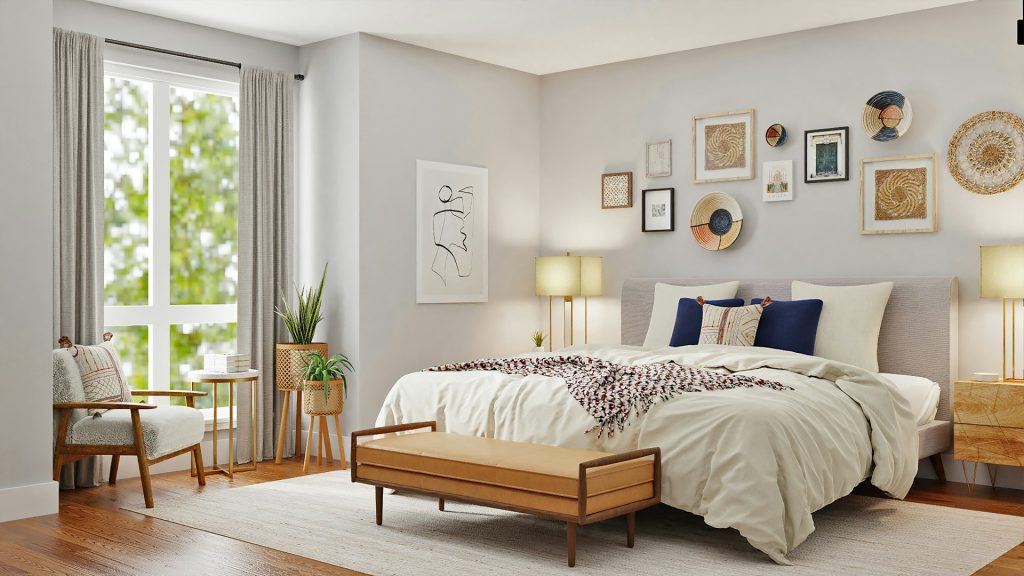
MintpalDecor Principles 6–10 Texture, Space, and Styling
RULE 6: Master the Art of Texture Layering — A beautiful room engages all the senses, not just the eyes.
Texture is what transforms a visually interesting room into one that feels physically inviting and deeply comfortable. A monochromatic room with no texture variation looks flat and clinical. The same colour palette with layered textures — smooth marble, rough linen, glossy ceramic, matte timber, fluffy wool — feels rich, luxurious, and alive.
- Hard textures (marble, glass, metal, ceramic): Reflect light and create a sense of sophistication and precision.
- Soft textures (linen, cotton, velvet, wool, leather): Absorb light and create warmth, comfort, and intimacy.
- Natural textures (timber, stone, rattan, jute, plants): Connect the interior to the natural world and create an organic, grounded feeling.
- The MintpalDecor texture rule: Aim for at least five different textures in every main living space. Count your materials — if they are all the same, the room will feel flat.
💡 MINTPALDECOR TIP: Cushions are the fastest, most affordable way to add texture. Choose covers in a mix of velvet, linen, knit, and embroidered fabrics in a coordinated colour palette. A set of four to six cushions on a sofa can completely transform a room’s atmosphere for under $80.
RULE 7: Respect Negative Space — What you leave empty is just as important as what you fill.
Negative space — the empty, unoccupied areas of a room — is one of the most misunderstood principles in interior design. Beginning decorators typically fill every surface, shelf, and corner. Experienced designers leave space deliberately, because negative space gives the eye somewhere to rest, makes individual pieces more impactful, and prevents a room from feeling cluttered and anxious.
- Edit ruthlessly: Remove at least 30% of what is currently on your shelves and surfaces. Group what remains into curated vignettes with clear space between them.
- Do not fill every wall: Leaving at least one wall completely clear in a room immediately makes the space feel more considered and less busy.
- Let furniture breathe: Do not push all furniture against the walls. Floating furniture away from walls — even by 10–15cm — creates a more sophisticated, layered arrangement.
RULE 8: Build a Cohesive Furniture Arrangement — Great rooms are planned — they are not assembled by accident.
Furniture arrangement is the architecture of a room’s interior. The way furniture is positioned affects how the space is used, how people move through it, how conversation flows, and how it feels to occupy. The most common furniture arrangement mistake is pushing everything against the walls — which actually makes rooms feel smaller and more disconnected.
- Identify the room’s purpose and primary activity: Conversation, watching television, reading, dining — the main activity drives the arrangement.
- Establish the focal point and arrange furniture to address it: Seating should face or frame the focal point naturally.
- Create clear traffic paths: Minimum 90cm walkways between pieces and from doorways to seating areas.
- Float furniture away from walls: In living rooms, bring sofas and chairs in from the wall. The room will feel larger and more intentional.
- Anchor with a rug: A correctly sized rug should have all key furniture pieces with at least their front legs on it. This unifies the arrangement and defines the zone.
🛋️ MintpalDecor Rug Sizing Rule: The most common rug mistake is buying one too small. In a living room, a rug should be large enough for all sofa and chair front legs to sit on it. The minimum size for a standard living room is 200x300cm. When in doubt, go one size larger.
RULE 9: Curate Art and Accessories Thoughtfully — Accessories are the personality of a room — choose them with intention.
Accessories — artwork, books, plants, vases, candles, sculptures, and personal objects — are what make a house feel like a home. But accessories can also make a room feel cluttered, dated, and visually chaotic when used without a clear editing eye. The MintpalDecor approach to accessorising is always: fewer, better, more meaningful.
- Art at eye level: Hang artwork so the centre of the piece sits at approximately 145–150cm from the floor — the average human eye level. This is consistently correct regardless of ceiling height.
- Create curated vignettes: Group accessories in triangular arrangements of odd numbers (3 or 5). Vary the height of objects in the group for visual interest.
- Use large art boldly: One large piece of art always looks more sophisticated and intentional than a collection of small, unrelated pieces on the same wall.
- Let plants breathe life: Indoor plants add organic texture, colour, and movement to any room. They are one of the most cost-effective styling tools available.
- Invest in a few quality pieces: Three beautiful, considered accessories will always outperform twenty mediocre ones. Quality over quantity is the consistent rule.
RULE 10: Develop Your Personal Design Style — The best-designed rooms have a clear, consistent point of view.
One of the most common reasons rooms feel unsatisfying is that they lack a clear stylistic identity — they are a collection of things the owner liked at different times, in different shops, influenced by different trends. Developing a clear personal design style means understanding what you are genuinely drawn to, why those things appeal to you, and how to combine them coherently.
- Build a design inspiration board: Save images from Pinterest, Instagram, and design magazines. After 50–100 saved images, patterns emerge — this is your authentic taste.
- Identify three words that describe your ideal home: Calm, warm, layered / Bold, modern, graphic / Natural, textured, earthy. These words become your editorial filter for every purchase.
- Study the styles you love: Scandinavian, Japandi, Maximalist, Mid-Century Modern, Bohemian, Classic English — each has clear principles. Understanding them helps you interpret and apply the elements you love.
- Mix styles deliberately: The most interesting interiors combine two styles thoughtfully. The MintpalDecor signature is warm modern — combining the warmth of natural materials and earthy tones with the clarity of modern forms.
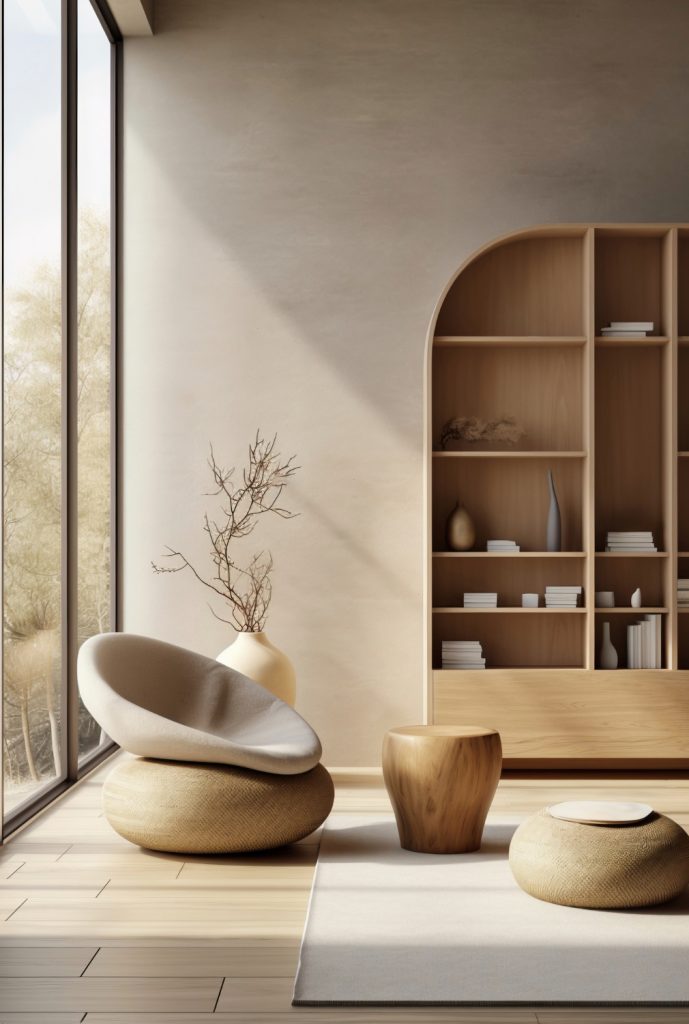
MintpalDecor Principles 11–15 Advanced Techniques for Stunning Spaces
RULE 11: Use Curtains to Transform a Room — Floor-to-ceiling curtains are the single most impactful textile in any room.
Curtains are frequently an afterthought, and this is one of the costliest mistakes in interior styling. Correctly hung curtains make ceilings feel higher, windows look larger, and rooms feel finished and luxurious. Incorrectly hung curtains make a beautiful room look incomplete and slightly wrong.
- Hang curtains high: Mount the curtain rod as close to the ceiling as possible — ideally 10–15cm below the ceiling line. This draws the eye upward and makes the room feel taller.
- Hang curtains wide: Extend the rod 20–30cm beyond the window frame on each side. This allows curtains to clear the window completely when open, maximising light and making the window appear significantly larger.
- Puddle or kiss the floor: Curtains that just touch the floor (kiss) or pool slightly (puddle by 5–10cm) look luxurious and intentional. Curtains that hover above the floor look too short.
- Choose fabric weight thoughtfully: Sheer linens create a soft, romantic atmosphere. Heavy velvet or blackout panels create drama and excellent light control. Layering both gives maximum flexibility.
RULE 12: Design with Natural Light as Your First Material — The best designers plan rooms around how light moves through the space.
Natural light is the most beautiful, most varied, and most underused resource in interior design. The quality, direction, and colour of natural light in a room changes throughout the day and across the seasons — and great interior design works with these changes rather than simply illuminating around them.
- East-facing rooms: Receive warm morning light that is golden and soft. Ideal for bedrooms and breakfast spaces. Suit warm, earthy colour palettes.
- South-facing rooms: Receive consistent, bright light throughout the day. The most versatile orientation — handles most colour palettes beautifully.
- West-facing rooms: Receive warm afternoon and evening light. Beautiful for living rooms and home offices where you work into the evening.
- North-facing rooms: Receive cool, diffused, shadow-free light. Ideal for studios and rooms where consistent light quality matters. Need warm colour palettes to compensate for the cool light quality.
💡 MINTPALDECOR TIP: Use mirrors strategically to move and multiply natural light. A large mirror placed on a wall perpendicular to a window reflects the window’s light deep into the room, effectively doubling the sense of natural brightness without any structural change.
RULE 13: Apply the Art of Mixing Old and New — The most characterful rooms combine different eras, origins, and stories.
Rooms furnished entirely with new pieces from a single retailer can look polished but often feel soulless and generic — as though they belong to a showroom rather than a life. The most memorable, characterful interiors mix vintage and contemporary, inherited and purchased, handmade and manufactured. This approach creates rooms with depth, story, and personality.
- Invest in one or two good antique or vintage pieces: A single beautiful vintage armchair, a mid-century sideboard, or an inherited ceramic piece grounds a modern room and gives it history.
- Mix furniture legs and bases: Combining furniture with different leg styles — tapered, hairpin, bun feet, plinth base — creates visual variety while maintaining cohesion through colour and material palette.
- Collect meaningful objects: Souvenirs from travel, inherited objects, handmade ceramics, and locally made pieces make a room feel lived-in and personal in a way that no amount of new furniture can replicate.
RULE 14: Consider the Room from Every Angle — A great room looks right from every position — not just the door.
Amateur decorators design rooms from a single viewpoint — usually standing in the doorway. Professional designers consider how a room looks and feels from every position: sitting on the sofa, lying in bed, standing at the kitchen counter, looking through a doorway from an adjacent room. Each viewpoint reveals different opportunities and problems.
- Stand in the doorway: This is the room’s first impression. It should have a clear focal point and feel balanced.
- Sit in the main seating position: Is the sightline pleasant from here? What do you look at when relaxing? Is there clutter in your eyeline?
- Look from the adjacent room or hallway: Rooms visible from corridors and other spaces contribute to the home’s overall visual flow. Consider whether colours and styles transition well.
- View from outside at night: A room lit warmly at night, seen from the street or garden, is part of your home’s presentation to the world. Layer lamplight for an inviting evening glow.
RULE 15: Commit to the Edit — Then Edit Again — Less is almost always more. The final 20% of decluttering is where most rooms find their magic.
The most consistently underappreciated skill in interior design is editing — the discipline of removing things that are not serving the room, even if they are individually beautiful or hold sentimental value. Every great designer edits relentlessly. They will add 5things to a room, then remove 3of them they will arrange a shelf, then take away half the objects they will hang 6pictures, then remove 2.
- The box test: Remove everything from a surface, shelf, or corner and put it in a box. Put back only the pieces that genuinely improve the space. Anything left in the box after two weeks can probably be stored or rehomed.
- Photograph the room: Looking at a room through a phone camera reveals clutter and imbalance that the eye glosses over in person. Photograph and review before and after each styling change.
- Sleep on changes: Live with new arrangements for at least 24–48 hours before making final decisions. First impressions in interior design are often misleading.
MintpalDecor Quick Reference: The 15 Design Principles at a Glance
| No: | Principle | Core Rule |
| 1 | Colour Theory | Use 60-30-10 rule; warm vs cool tones define room mood |
| 2 | Scale & Proportion | Measure before buying; float furniture, respect space |
| 3 | Focal Point | Every room needs one anchor that the eye goes to first |
| 4 | Layer Lighting | Ambient + task + accent = complete, flexible lighting |
| 5 | Rhythm & Repetition | Repeat colours, shapes, materials; use odd numbers |
| 6 | Texture Layering | 5+ textures per main room; hard, soft, and natural |
| 7 | Negative Space | Edit 30% of surfaces; space makes remaining pieces shine |
| 8 | Furniture Arrangement | Float from walls; anchor with correctly-sized rug |
| 9 | Art & Accessories | Eye level art; vignettes in 3s; quality over quantity |
| 10 | Personal Style | Find 3 words for your ideal home; build a style board |
| 11 | Curtains | Hang high, hang wide, kiss the floor |
| 12 | Natural Light | Design with light direction; use mirrors to amplify |
| 13 | Mix Old & New | One vintage piece gives a room depth and character |
| 14 | Every Angle | Design for all viewpoints, not just the doorway |
| 15 | Edit Ruthlessly | Remove 30% more than feels comfortable — then stop |
Frequently Asked Questions: How to Be Better at Interior Design
Q: Can I learn interior design without formal training?
A: Absolutely. The core principles of interior design — colour theory, proportion, lighting, texture, and spatial arrangement — are learnable by anyone. Professional designers spend years mastering these principles, but homeowners who study and apply them consistently can achieve genuinely impressive results. Start with one principle at a time and apply it deliberately in one room before moving to the next.
Q: What is the most important interior design principle for beginners?
A: Colour theory is the single most impactful place to start. Understanding warm versus cool tones, the 60-30-10 colour rule, and how to test colours in your specific light conditions before committing will immediately improve every room you design. Get colour right and most other elements will fall into place more naturally.
Q: How do I develop my personal interior design style?
A: Start by saving images of spaces you love — Pinterest and Instagram are ideal for this. After saving 50–100 images, review them for recurring elements: colours, materials, furniture styles, levels of decoration. These patterns reveal your authentic aesthetic. Next, define your style in three words and use those words as your editorial filter for every future purchase and design decision.
Q: What is the MintpalDecor signature style?
A: MintpalDecor’s signature aesthetic is warm modern — a design philosophy that combines the clean lines and purposeful simplicity of modern design with the warmth, depth, and organic character of natural materials, earthy colour palettes, and carefully curated personal objects. The result is spaces that feel both sophisticated and genuinely liveable.
Q: How do I make a room look more expensive without spending a lot of money?
A: Several high-impact, low-cost changes make rooms look significantly more expensive: hang curtains as close to the ceiling as possible (this alone transforms most rooms); replace all light switch and plug socket covers with matching ones; add a large mirror to reflect light; swap cheap cushion covers for quality linen or velvet ones; remove visual clutter by editing surfaces to 50% of what was there. These five changes typically cost under $100 combined and produce a dramatic result.
Conclusion: Design Better Every Day with MintpalDecor
Becoming how to be better at interior design mintpaldecor is a journey, not a destination. Every room you style teaches you something new about proportion, colour, light, and the relationship between objects and space. The fifteen MintpalDecor principles in this guide are not rules to follow rigidly — they are frameworks for thinking about space more intentionally, more analytically, and more creatively.
Start with what is in front of you right now. Pick one room, apply one principle — perhaps the 60-30-10 colour rule, or the decision to layer three types of lighting — and observe how it changes the space. Then apply another principle. Small, considered changes compound into remarkable transformations.
At MintpalDecor, we believe that beautiful spaces are not a luxury — they are a fundamental part of a life well-lived. A home that is designed with intention, care, and genuine personal expression does more than look good. It feels right. And when a space feels right, everything that happens within it is elevated.
Design intentionally. Edit fearlessly. Live beautifully. — MintpalDecor
Your Questions: how to be better at interior design, interior design tips for beginners, MintpalDecor interior design, improve interior design skills, interior design principles, home decorating tips 2026, how to decorate a room like a designer, interior design colour theory, furniture arrangement tips, interior styling guide