
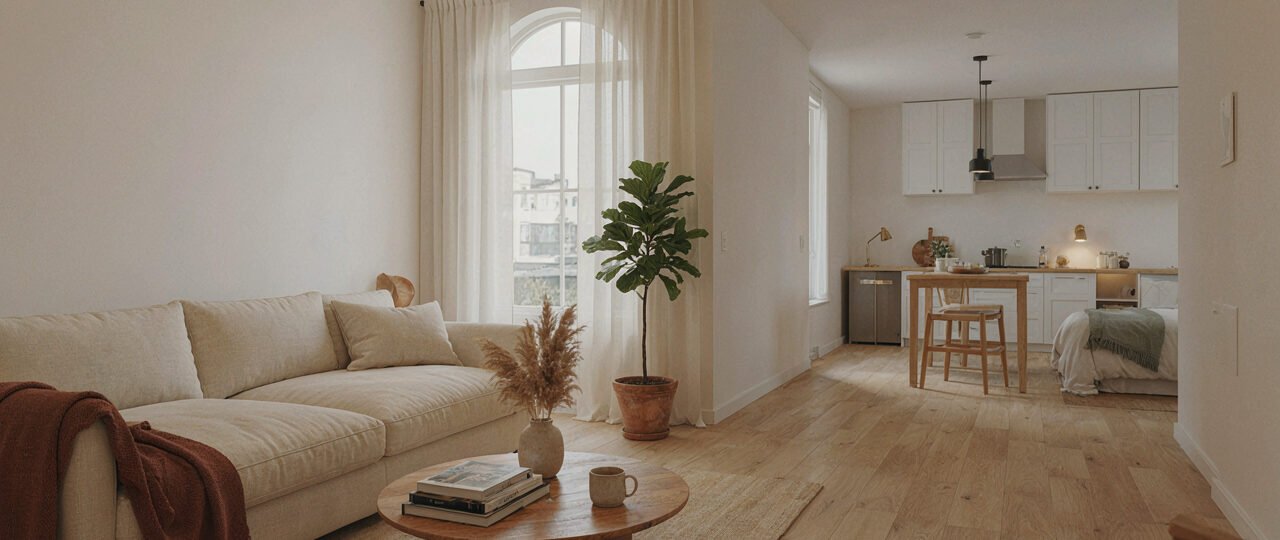

A small two-bedroom house can feel surprisingly spacious when its interior is planned carefully. The secret is not simply using less furniture it is choosing the right layout, colors, lighting, storage, and décor for the available space.
Good Interior Design for Small House with 2 Bedrooms should make everyday living easier while keeping the home attractive and comfortable. With a few smart choices, even compact rooms can feel open, organized, and welcoming.
Begin With the Layout
Before buying furniture or choosing decorative pieces, consider how people will move through the house.
Avoid blocking doors, windows, and main walking paths with oversized furniture. Arrange larger pieces first, then fill the remaining areas with smaller items.
An efficient layout can make a small home feel larger without changing its actual dimensions.
Think about:
- Where furniture will be placed
- How doors and windows open
- Main walking routes
- Storage locations
- Natural light
- How each room will be used
Make the Living Room Work Harder
The living room often serves several purposes in a small house. It may be used for relaxing, entertaining, watching television, or even occasional work.
Choose furniture according to the room’s proportions rather than buying the largest sofa that fits.
A compact sofa, lightweight side table, wall-mounted television, and a carefully positioned rug can create a comfortable arrangement without overwhelming the room.
Furniture with visible legs can also help maintain a sense of openness because more of the floor remains visible.
Choose a Calm Color Palette
Color can strongly influence how spacious a room feels.
Light neutrals, soft whites, warm beige, pale gray, and other subtle shades can reflect light and create an airy atmosphere.
This does not mean every wall needs to be white. You can introduce personality through:
- Accent cushions
- Artwork
- Curtains
- Rugs
- Plants
- Decorative objects
Keeping the larger surfaces relatively consistent can help the home feel visually connected.
Use Mirrors Strategically
Mirrors can make compact interiors feel brighter and more open by reflecting light and views.
Instead of covering every wall with mirrors, choose one or two strategic locations. A large mirror opposite a window can help distribute natural light, while a decorative mirror in a hallway can make a narrow area feel less enclosed.
The placement matters more than the number of mirrors.
Give the 2 Bedrooms Different Roles
Two bedrooms do not have to look identical.
The main bedroom can focus on comfort and relaxation, while the second bedroom can be adapted to the household’s needs. It could function as a child’s room, guest room, home office, or combination space.
Use appropriately sized furniture and avoid unnecessary pieces.
For a smaller bedroom, consider:
- A bed with built-in storage
- Wall-mounted shelves
- Compact bedside tables
- Under-bed organizers
- Vertical storage
Using the walls effectively can free up valuable floor space.
Think Vertically About Storage
When floor space is limited, look upward.
Tall shelving, wall-mounted cabinets, hooks, and vertical organizers can provide useful storage without taking up much floor area.
In the kitchen, for example, cabinets that extend higher can make use of otherwise wasted wall space. In bedrooms, floating shelves can provide room for books and small personal items.
The objective is not simply to add storage—it is to keep frequently used items organized and accessible.
Keep the Kitchen Simple
A small kitchen benefits from a clean and efficient arrangement.
Use the available counter space carefully and avoid displaying too many appliances or decorative objects. Store less frequently used items in cabinets or higher storage areas where appropriate.
Light-colored cabinets, reflective surfaces, and good task lighting can help the kitchen feel more open.
If possible, choose multifunctional kitchen accessories that perform more than one task.
Use Lighting in Layers
A single ceiling light may not be enough for a compact home.
Layered lighting can make rooms more functional and visually interesting. Combine general lighting with task and accent lighting where appropriate.
For example:
- Ceiling lighting provides overall illumination.
- Under-cabinet lighting helps with kitchen tasks.
- Bedside lamps provide focused bedroom lighting.
- Floor or table lamps add warmth to living areas.
Good lighting can also highlight architectural features and decorative elements.
Select Furniture With Multiple Uses
Multifunctional furniture is particularly valuable in a small two-bedroom house.
Consider pieces such as:
- Storage ottomans
- Extendable dining tables
- Sofa beds
- Beds with drawers
- Folding desks
- Nesting tables
- Benches with hidden storage
These pieces allow one area to serve multiple purposes without permanently filling the room with furniture.
Create Visual Continuity
A small home can feel fragmented when every room uses completely different colors and materials.
Instead, repeat a few elements throughout the house. Similar flooring, complementary wall colors, matching metal finishes, or consistent wood tones can create a stronger sense of continuity.
You can still give each room its own personality while maintaining a connection between spaces.
Don’t Forget the Entryway
Even a tiny entryway deserves attention.
A narrow console, wall hooks, small bench, or floating shelf can create a practical drop zone for everyday items.
Keep this area organized because clutter at the entrance can immediately make the entire home feel smaller.
A mirror, simple artwork, or attractive light fixture can add personality without requiring much space.
Keep Décor Intentional
Small spaces can quickly become crowded with decorative objects.
Rather than filling every shelf and tabletop, choose a few pieces that have visual or personal value.
A small collection of artwork, a plant, a decorative vase, or a few favorite books may be enough to give a room character.
Leave some empty space around decorative pieces. That breathing room can make the entire interior feel more refined.
Make the Bathroom Feel More Open
Bathrooms in small homes often benefit from simple visual strategies.
Light colors, a large mirror, clear shower panels where suitable, and efficient storage can help reduce the feeling of crowding.
Wall-mounted storage can also keep toiletries organized while preserving floor space.
Focus on functionality first, then add decorative details through towels, lighting, hardware, or small accessories.
Avoid Common Small-Home Design Mistakes
Even good ideas can work poorly when used without considering the room.
Try to avoid:
- Oversized furniture
- Too many competing colors
- Blocking windows with furniture
- Excessive decorative objects
- Poor lighting
- Ignoring vertical storage
- Buying furniture before measuring
- Creating narrow walking paths
Always measure the room and furniture before purchasing large items.
A Simple Design Formula
If you are starting from scratch, use this straightforward process:
1. Measure the space
Record room dimensions, doors, windows, and fixed features.
2. Decide the purpose
Determine how each room will actually be used.
3. Select large furniture first
Choose appropriately sized essential pieces.
4. Build a color palette
Keep the main surfaces coordinated.
5. Add storage
Use walls and multifunctional furniture where possible.
6. Improve lighting
Combine general, task, and accent lighting.
7. Add personality
Finish with artwork, textiles, plants, and meaningful accessories.
This approach helps you avoid buying items that do not fit the space or serve a useful purpose.
Final Thoughts
Successful Interior Design for Small House with 2 Bedrooms is about making every decision count. A compact home does not need to feel cramped when the layout is efficient, storage is organized, and furniture is selected with care.
Use light and coordinated colors, take advantage of vertical space, choose multifunctional furniture, and keep decorative elements intentional. Most importantly, design around the way you actually live.
A small home can be stylish, practical, and comfortable when good design focuses on both beauty and everyday functionality.
FAQs
How can I make a small two-bedroom house look bigger?
Use appropriately sized furniture, keep walking paths open, maximize natural light, choose a coordinated color palette, and use mirrors strategically. Reducing visible clutter can also make rooms feel more spacious.
What colors work best in a small house?
Light and soft colors can help reflect light and create an airy feeling. Whites, warm neutrals, pale grays, and soft earthy shades are common choices, although darker accents can still be used for contrast.
What furniture is best for a small two-bedroom home?
Multifunctional and appropriately scaled furniture is usually a practical choice. Beds with storage, compact sofas, nesting tables, folding desks, and storage ottomans can help maximize available space.
How can I add storage without making rooms feel crowded?
Use vertical space with floating shelves, tall cabinets, wall-mounted organizers, and hooks. Hidden storage inside beds, benches, and ottomans can also reduce visible clutter.
Should both bedrooms have the same interior design?
Not necessarily. The bedrooms can have different colors and décor based on their purpose while sharing a few materials or design elements to maintain visual harmony throughout the home.
Is minimalist design suitable for a small house?
Yes. Minimalist principles can work particularly well in compact homes because they emphasize functionality, organization, and avoiding unnecessary clutter. However, the goal should be comfortable simplicity rather than an empty-looking room.