
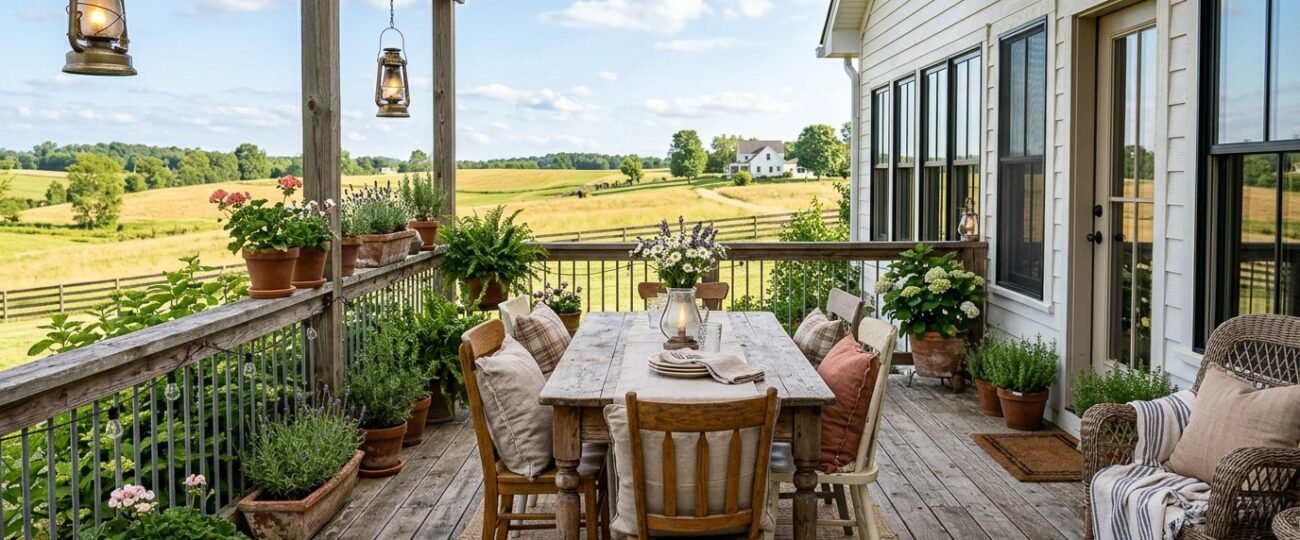

In short, farmhouse deck design incorporates natural materials, neutral colors, and comfy seating options to foster a relaxing outdoor ambiance. Some of the components are wood or composite decking, black or white metal railings, string lighting, weathered furniture and layered textiles. Whether choosing light or dark wood colors, or wood versus hard materials, it should all be based on the budget, climate and maintenance requirements of the deck that will perform for years and remain attractive.
A well-designed farmhouse deck provides a certain level of comfort. Does not cry out for attention. Rather, it asks you to take a step back, have a cup of coffee, and experience the yard come to life. A deck is one of the best ways to take that feeling out of the house, as that is what farmhouse style is all about.
Farmhouse designs are based on the architecture of rural America, so they are characterized by simple textures, shades, and features. As a result, when used on a deck, it equates to warm wood finishes, low maintenance railings, weathered accents and furniture that seems to have been cherished over many years instead of unwrapped yesterday. The outcome is a room that is grounded and true to its nature.
This guide explains the design considerations that make up farmhouse decks including materials, lighting, furniture and layout. These ideas are designed to help you create a deck that’s both in line with your home and your budget, whether you’re looking at a complete deck makeover or just some minor changes.What Defines Farmhouse Deck Style?
Farmhouse style is not a design trend, but it is its history. It emerged out of functionality in rural life, where houses were constructed first of all for function and decoration was whatever was available. That legacy continues to influence the appearance even in suburban and urban settings, today.
There are some common traits of farmhouse decks:
- Natural materials. Wood is the backbone of farmhouse style, though composite materials with wood-grain finishes are a practical modern substitute.
- Neutral, earthy color palettes. Think whites, grays, soft browns, and black accents rather than bold or saturated colors.
- Simple lines. Railings, posts, and trim tend to be straightforward rather than ornate.
- A mix of old and new. Vintage-inspired furniture or reclaimed materials paired with modern comfort features like weatherproof cushions.
The forgiving farmhouse style is a good choice. It doesn’t have to be perfectly symmetrical or the most costly fabric to be meant to be. Effect achieved with a few carefully selected elements, applied uniformly.
Which Decking Materials Work Best for a Farmhouse Look?
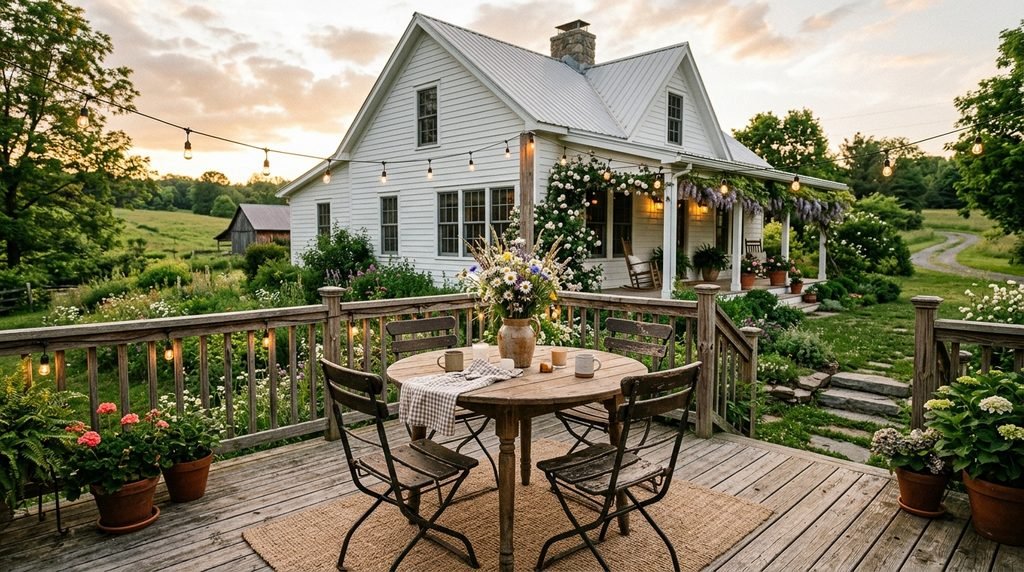
Material choice affects both appearance and long-term maintenance, so it’s worth weighing the trade-offs before committing.
Wood Decking
The natural wood is the perfectly classic material for farmhouse decks, as it is naturally textured and warm. Pressure treated pine is the most economical, cedar and redwood are used due to the natural resistance to rot and insects.
The compromise is maintenance. Wood decks should be resealed or stained every 1-3 years, so as to help prevent warping, splitting and fading. That maintenance schedule could be more frequent in wet or rainy climates.
Composite Decking
A popular substitute is composite boards, which are a mixture of wood fibers and recycled plastic. Today, there are composites that closely simulate an old wood surface and many are pre-finished in farmhouse colors such as driftwood gray or warm taupe.
The initial price of composite decking is higher than pressure-treated wood, but the maintenance costs are much lower. It’s not stained or sealed, and most composite boards won’t fade, splinter or get damaged by insects for decades. Composite might make more sense for the homeowner who desires the farmhouse look but doesn’t want to deal with the maintenance.
Choosing Between Wood and Composite
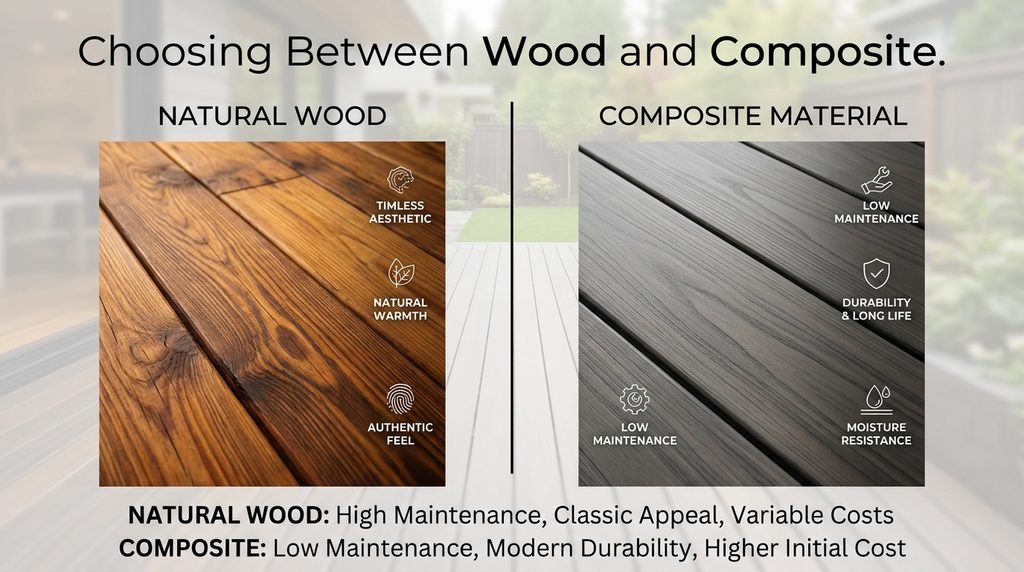
It depends on priorities what material is chosen. If you prefer the natural texture and grain of wood, and you’re not looking for a deck that is low maintenance, you might want to use natural wood, but be prepared to reseal the deck every once in a while. Opt for composite when durability over a long period of time and low maintenance are more crucial than a real wood feel.
How Should Railings and Posts Be Styled?
Railings are a structural element that is most apparent on a deck and are a significant part of the farmhouse character.
Contrasting black metal railings and rounded wood posts and caps have become a hallmark of a farmhouse style. Another traditional choice is white painted wood railings particularly on decks that are connected on homes with white or light colored sidewalls.
Some homeowners use horizontal wooden slats in their railing designs, or even reclaimed barn wood for a more rustic look. This works well on lower graded decks, close to the ground, because the horizontal lines reflect traditional farm fencing.
Cable rails, though more modern, can be used at a modern farmhouse if they are used with wood posts. They are also clear of obstructions and are important for decks with open views over a yard, garden or landscape.
What Furniture Fits a Farmhouse Deck?
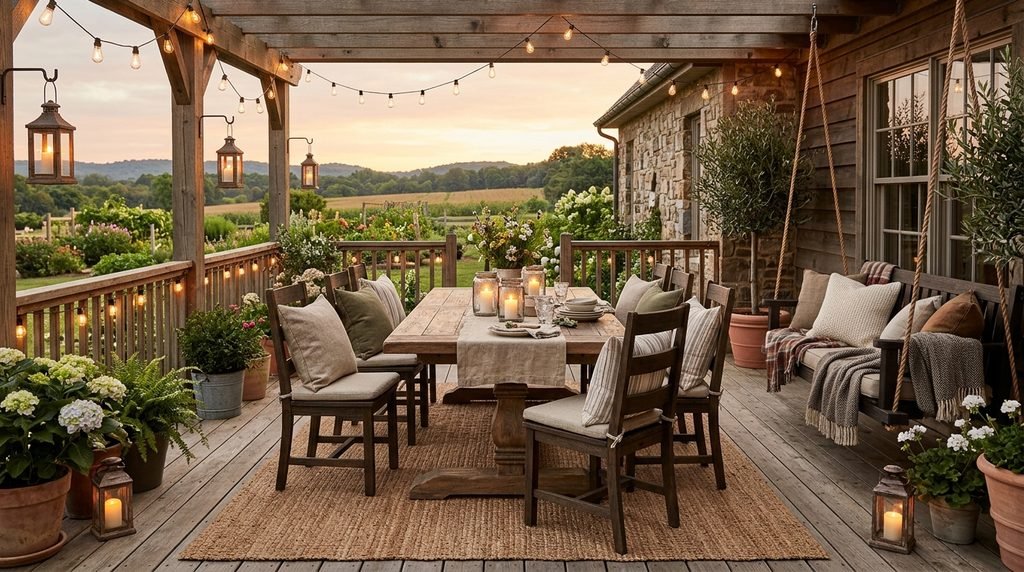
Furniture does a lot of the work in establishing farmhouse character, often more than the decking material itself.
Seating
Farmhouse style naturally complements wicker and rattan furniture, particularly those that are in natural colors or whitewashed. Wooden Adirondack chairs are also a good choice, especially in rustic gray or light white colors.
Larger decks can be easily turned into a natural gathering space with a wooden farmhouse style dining table and benches. Benches are ideal for the farmhouse style and work well with the communal, practical vibe that this style is characterized by, as compared to individual chairs.
Textiles
Neutral linen, cotton or burlap-inspired cushions and throw pillows provide softness without overpowering the color palette. Stripes in muted tones (navy and cream, for example) are a common farmhouse pattern choice. When it comes to the outdoors, untreated fabrics will start to grow dull and mildew in no time, so it’s a worthwhile investment to use outdoor-rated fabrics here.
Accent Pieces
There are farmhouse touches to be derived from the galvanized metal buckets for planters, the wooden crates for side tables and even from the vintage lanterns. These pieces need to be used in a couple and not in excess. Too much rustic equipment on a deck can start to look “cluttered” instead of “curated.
What Lighting Choices Enhance a Farmhouse Deck?
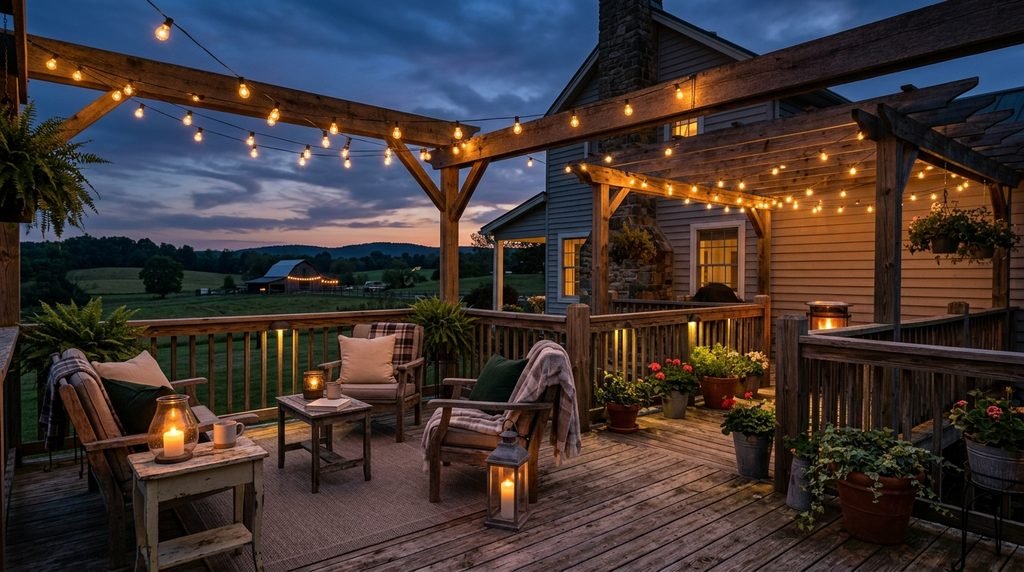
Lighting shapes how a deck feels after sunset, and farmhouse style tends to favor warm, soft light over bright or cool-toned fixtures.
String lights remain one of the most popular choices, strung overhead in loose swags or along railings. Edison-style bulbs, with their visible filaments and warm amber glow, suit the farmhouse aesthetic particularly well.
Lanterns, whether hung from hooks or placed on tables, add another layer of ambient light. Solar-powered options have improved significantly in recent years and eliminate the need for wiring, which makes them a practical choice for decks without easy access to outdoor outlets.
Wall-mounted sconces near the house, especially in black or oil-rubbed bronze finishes, complement metal railings and add functional lighting near entry points. For decks used frequently after dark, combining a few of these layers (overhead string lights, a lantern or two, and a sconce by the door) creates a more comfortable and functional space than relying on a single light source.
How Can a Small Deck Still Achieve a Farmhouse Feel?
Not every home has room for a sprawling deck, and farmhouse style can still work in compact spaces with a few adjustments.
Scaling down furniture is the first step. A small bistro-style table with two chairs, rather than a full dining set, keeps the space functional without feeling cramped. Built-in bench seating along the railing is another space-saving option that doubles as both seating and visual structure.
Vertical elements help too. A pergola or simple overhead beam structure adds farmhouse character and makes a small deck feel more defined, even without additional square footage. Planters mounted on railings, rather than placed on the floor, keep greenery present without taking up usable space.
Color consistency matters more on small decks, since there’s less room to balance competing tones. Sticking to two or three colors (a neutral base, a wood tone, and one accent color) keeps a compact space from feeling visually busy.
What Landscaping Pairs Well with a Farmhouse Deck?
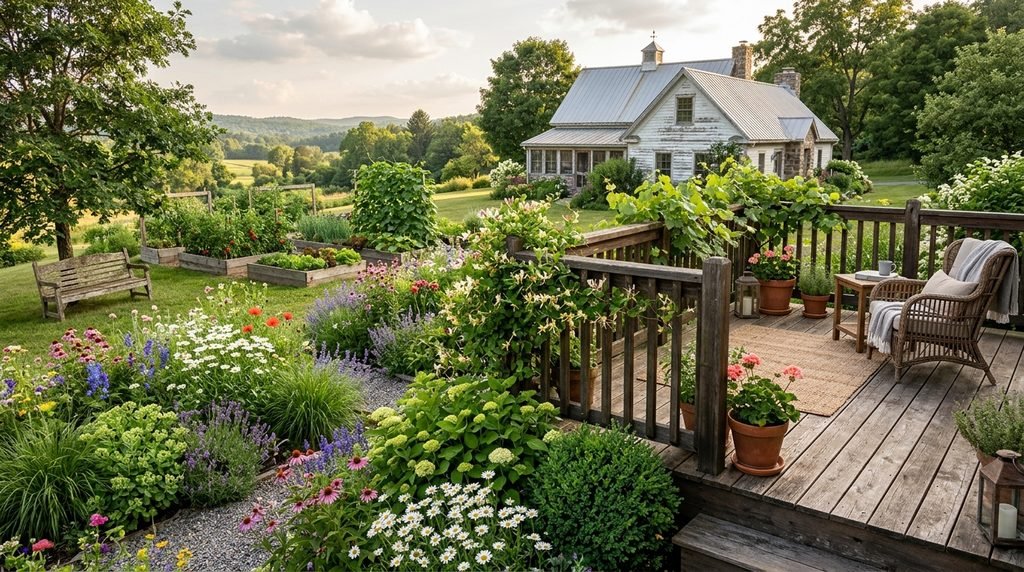
The area surrounding a deck influences how well the farmhouse aesthetic reads overall. Wildflower gardens, ornamental grasses, and climbing vines like clematis or climbing hydrangea all complement the relaxed, slightly untamed character of farmhouse style.
Raised garden beds built from the same wood as the deck create visual continuity between the structure and the landscaping. For decks near a backyard or open field, a simple wood or wire fence in the distance can reinforce the rural aesthetic without requiring major landscaping work.
Potted herbs near the deck’s seating area serve a dual purpose, adding greenery while offering something functional for outdoor cooking or entertaining.
What Are Common Mistakes to Avoid?
A few missteps can undercut an otherwise well-planned farmhouse deck.
Over-accessorizing. Farmhouse style relies on restraint. Too many decorative elements, especially mismatched ones, can make a deck feel cluttered instead of curated.
Ignoring maintenance realities. Natural wood looks appealing in photos, but it requires consistent upkeep. Homeowners who choose wood without planning for regular staining often end up with a deck that looks worn down within a few years rather than charmingly weathered.
Mixing too many finishes. Combining black, bronze, and brass hardware on the same deck can create visual noise. Sticking to one or two metal finishes throughout keeps the look cohesive.
Underestimating sun and weather exposure. Textiles and furniture that aren’t rated for outdoor use will fade or deteriorate quickly, particularly in regions with strong sun exposure or high humidity. Checking fabric and material ratings before purchasing saves money and frustration later.
Bringing It All Together
A farmhouse deck succeeds when its individual elements, materials, color palette, furniture, and lighting, work together rather than competing for attention. Start with the structural decisions (decking material, railing style) since those are the most expensive and difficult to change later. From there, layer in furniture, textiles, and lighting gradually, adjusting as the space gets used through different seasons.
There’s no need to complete every element at once. Many of the most convincing farmhouse decks develop over time, as furniture is added, plants mature, and small details like lanterns or planters accumulate. That gradual, lived-in quality is, in many ways, the whole point of the style.
Frequently Asked Questions
What is the best decking material for a farmhouse-style deck?
Both natural wood and composite decking work well for farmhouse style. Wood offers more authentic texture but requires regular maintenance, while composite decking provides a similar look with significantly less upkeep over time.
How much does it cost to build a farmhouse-style deck?
Costs vary widely based on size, material, and location, but composite decking generally costs more upfront than pressure-treated wood, while requiring less long-term maintenance spending. Getting quotes from local contractors is the most reliable way to estimate costs for a specific project.
Can a small deck still look like a farmhouse deck?
Yes. Scaling down furniture, using built-in seating, adding vertical elements like a pergola, and limiting the color palette to two or three tones all help smaller decks achieve a cohesive farmhouse look.
What color scheme works best for a farmhouse deck?
Neutral palettes work best, typically combining a light base color (white or gray), a natural wood tone, and one accent color such as black or navy. Keeping the palette simple helps the space feel intentional rather than cluttered.
Does a farmhouse deck require special maintenance compared to other styles?
Maintenance depends more on material choice than style. Natural wood decks need periodic sealing or staining regardless of design style, while composite decking requires minimal upkeep. Textiles and metal fixtures used in farmhouse design should be rated for outdoor use to withstand weather exposure.