
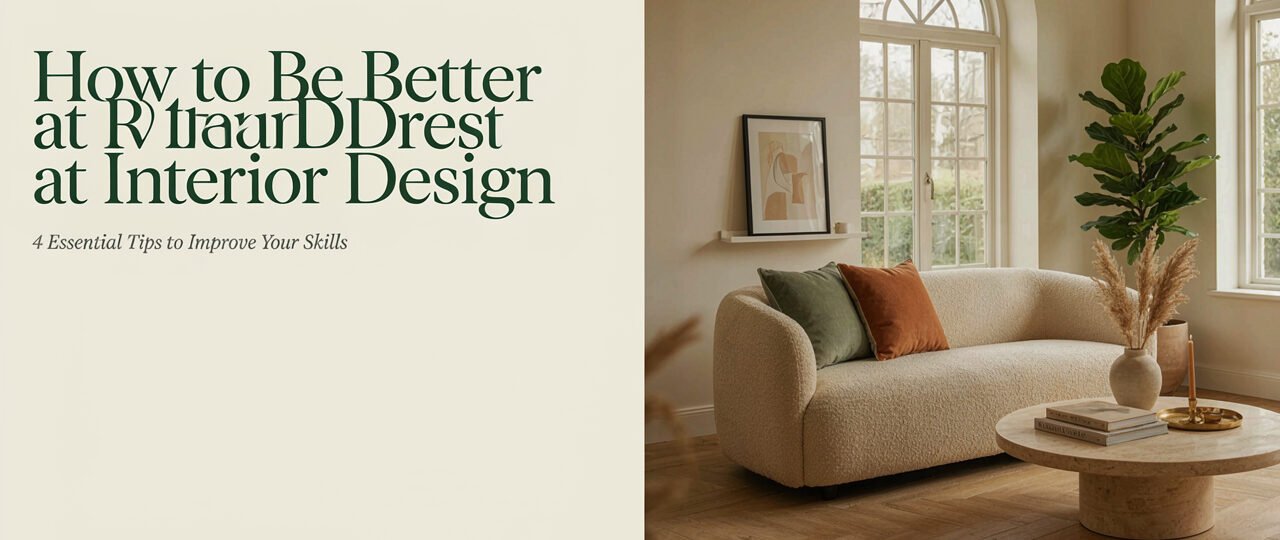

Interior design is an exciting combination of creativity, planning, and problem-solving. Whether you are decorating your own home or hoping to improve your design knowledge, learning how to be better at interior design takes practice and an understanding of the basic principles.
The good news is that you do not need to be a professional designer to create beautiful and functional spaces. By improving your understanding of color, space, furniture placement, lighting, and decorative details, you can develop stronger interior design skills over time.
Here are four essential tips to help you become better at interior design and create spaces that feel stylish, balanced, and comfortable.
1. Learn the Basics of Color, Space, and Balance
One of the best ways to understand how to be better at interior design is to learn the fundamental principles of design.
Color has a major influence on how a room looks and feels. Light colors can make a small room feel more open, while darker shades can create a cozy and dramatic atmosphere. Before choosing a color palette, think about the mood you want to create.
Balance is equally important. A room should not feel too heavy on one side or overcrowded with furniture and accessories. Try to distribute visual weight throughout the space.
Pay attention to:
- Color combinations
- Room proportions
- Furniture size
- Empty space
- Symmetry and balance
- Focal points
Understanding these basics will help you make better design decisions and avoid a room feeling cluttered or unbalanced.
2. Find Inspiration and Develop Your Own Interior Design Style
Exploring different styles is an important part of improving your interior design skills. Look at modern, minimalist, traditional, Scandinavian, bohemian, industrial, and contemporary interiors.
As you explore different spaces, pay attention to the details you naturally enjoy. You may discover that you prefer neutral colors, natural materials, bold patterns, vintage furniture, or simple modern spaces.
Create inspiration collections based on:
- Color palettes
- Furniture styles
- Lighting ideas
- Wall décor
- Flooring and materials
- Room layouts
However, learning from inspiration does not mean copying every design you see. The goal is to understand why certain spaces look attractive and then develop your own approach.
The more interiors you study, the easier it becomes to recognize what works well together.
3. Practice Space Planning and Furniture Arrangement
Good space planning is one of the most valuable interior design skills. Even beautiful furniture and décor can look ineffective if they are arranged poorly.
Before placing furniture, think about how people will move through the room. Make sure there is enough space for comfortable movement and that furniture supports the main purpose of the area.
For example, a living room should encourage conversation and relaxation, while a bedroom should feel comfortable and peaceful.
When arranging furniture, consider:
- The size and shape of the room
- Natural walking paths
- The location of doors and windows
- The room’s main focal point
- Furniture proportions
- Available storage
Avoid pushing every piece of furniture against the walls automatically. In some rooms, bringing furniture slightly inward can create a more comfortable and balanced layout.
Practicing different arrangements is one of the easiest ways to learn how to be better at interior design.
4. Experiment with Lighting, Textures, and Decorative Details
The finishing details can make a major difference in interior design. Lighting, textures, fabrics, and accessories help create depth and personality.
Instead of relying on one overhead light, consider using multiple layers of lighting. Combine general lighting with table lamps, floor lamps, or accent lighting to create a warmer and more flexible atmosphere.
Textures are also important. A room with too many smooth surfaces can sometimes feel plain. Mixing materials can make a space more interesting.
Try combining:
- Soft fabrics and cushions
- Natural wood
- Metal accents
- Rugs and textured textiles
- Glass and mirrors
- Indoor plants
Decorative details should support the overall design instead of overwhelming the room. Choose accessories that have meaning or contribute to the style you want to achieve.
Small details can often transform an ordinary room into a more personal and inviting space.
How to Improve Your Interior Design Skills Through Practice
Like any creative skill, interior design improves with practice. Start with small projects and experiment without putting too much pressure on yourself.
You could rearrange your living room, update a bedroom corner, create a gallery wall, or try a new color combination. Take photos before and after making changes so you can evaluate what worked well.
You can also improve by asking yourself important questions about every space:
- Does the room feel balanced?
- Is the furniture comfortable and practical?
- Does the color palette work well together?
- Is there enough lighting?
- Does the space reflect the personality of the people who use it?
Over time, you will become more confident in identifying design problems and finding creative solutions.
Common Mistakes to Avoid When Improving Your Interior Design
When learning interior design, it is normal to make mistakes. However, understanding common problems can help you improve faster.
Avoid choosing furniture that is too large for the room, overcrowding surfaces with decorations, or using too many unrelated colors.
It is also important not to follow trends without considering whether they suit your space and lifestyle. A beautiful design should be both visually appealing and practical.
Remember that empty space is also part of good design. You do not need to fill every corner of a room.
Final Thoughts
Learning how to be better at interior design is a journey that combines creativity, knowledge, and practice. Start by understanding the basics of color, balance, and space. Explore different styles, practice furniture arrangement, and experiment with lighting and textures.
Most importantly, give yourself time to develop your own design style. The best interiors are not simply copies of popular trends. They are spaces that feel beautiful, functional, comfortable, and personal.
At MintpalDecor, we believe that anyone can improve their interior design skills by staying curious, experimenting with new ideas, and learning from every space they create.
With practice and creativity, you can turn ordinary rooms into spaces that feel stylish, welcoming, and uniquely your own.