
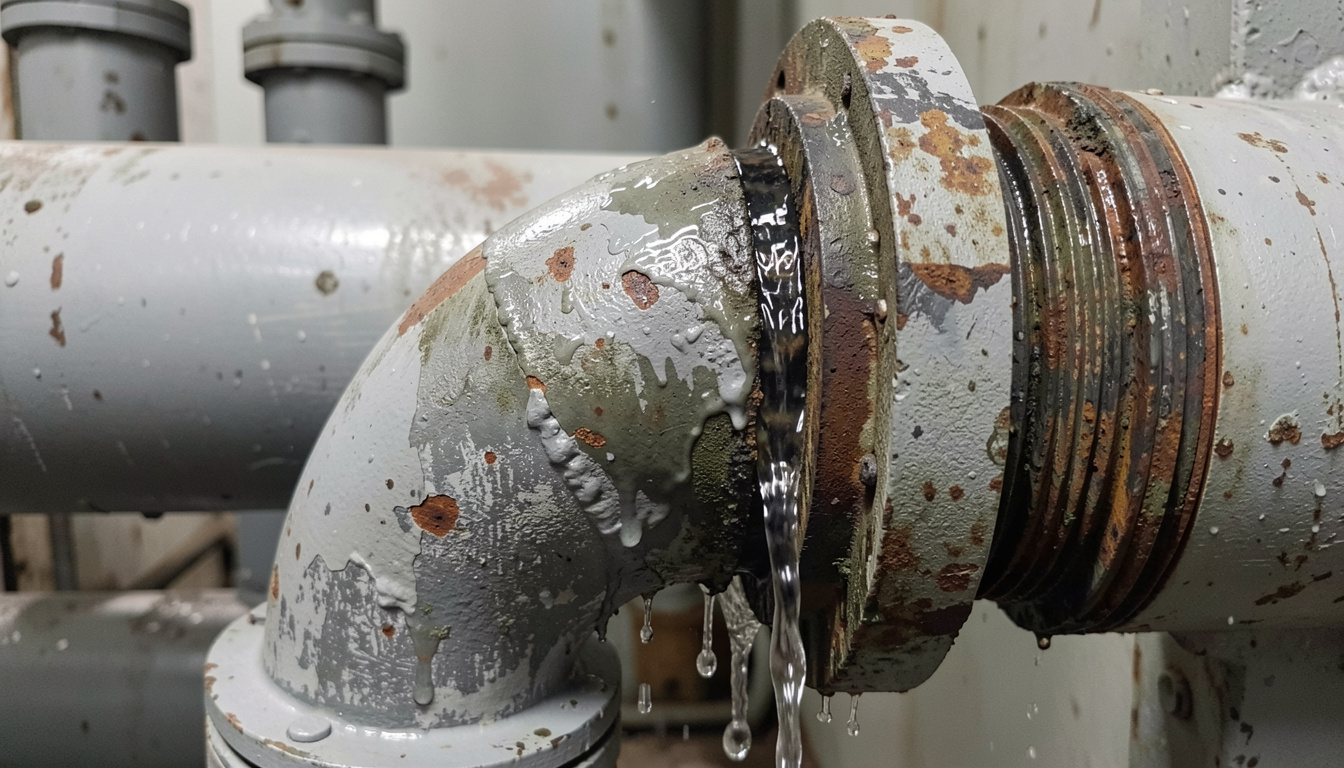

A leaking pipe joint is no fun, especially when water damage starts to wreak havoc on your walls, floors and ceiling. Whether you’re a homeowner or a DIY enthusiast, knowing how to fix a leaky pipe joint can save you time and money (not to mention disrupting the pesky drip sound!) literally hundreds of dollars even if it’s after-hours or on weekends.
In this complete guide I will describe the various methods used to repair a leak PVC pipe joint, and they are in fact reliable ways of stopping this kind of leak.
Pipe Joint Leaks – In Depth: What’s Behind Them?
Before you delve into pipe repair, it’s important to comprehend why they’re leaking in the first place. The majority of leaks are caused by seal wear, incorrect installation and natural ageing.
Pipes expand and contract as the temperature changes, coupling made loosened over time. And high water pressure can place ongoing stress on joints, developing fissure points at which water can escape. Corrosion is another big problem, especially in older homes with galvanized steel or brass fittings.
Improper installation, not enough thread sealant or overtightening are also big causes of joints failing prematurely. The understanding of these sources can guide you in selecting the most appropriate repair method for your particular case.
Tools and Materials You’ll Need
The right tools make repairing pipe joints dramatically easier and more effective. You will need an adjustable wrench or pipe wrench to loosen and tighten connections appropriately for most jobs.
Sealant tape (Teflon is a popular brand) that you install on threads in joints to make them water tight. I have both standard white tape for cold water, and the yellow gas line tape in my toolbox at all times.
Pipe joint compound (also called pipe dope) adds an extra layer of protection and also fills in gaps or voids in threads, which is particularly helpful with larger diameter pipes. Epoxy putty and pipe repair clamps can stop leaks temporarily while you fix the hot water heater.
Other useful items are a wire brush to clean threads, emery cloth to smooth pipe surfaces and towels in a bucket to catch water during repairs.
How to Stop a Catastrophic Leaking Threaded Pipe Joint, Solved Step by Step
Threaded connections are the most common type of joint for pipes used in home plumbing. Repairing them involves a very gentle disassembly and correct resealing.
First, turn off the water to the affected pipe. This is an important step, as it will prevent flooding on your property and ensure that your work is conducted without risk. Open faucets near the line to allow any remaining water to drain out.
Then gently unscrew the leaking joint with your pipe wrench. Grip the pipe with one wrench, and turn the fitting counterclockwise with another. When removed, clean the male threads on the pipe and female threads inside fitting with a wire brush.
Wrap pipe thread sealant tape clockwise three to five times around male threads. You want it to cover the threads in its entirety without too much overlapping. Then, tape over the joint with a thin layer of pipe joint compound for extra sealing.
Gently thread it back by hand and then wrench tighten. Do not overtighten, as this can result in cracking fittings or stripping threads. Slowly turn the water back on and inspect for any leaks.
Rapid Fixes for Leaking Pipes at the Pipe Joint in an Emergency
There are also times when you need something that works right away, while you’re calling a pro or waiting for the more permanent fix. Pipe repair clamps are your friends in such times.
These are metal clamps that fit over the leaking joint, which have a rubber gasket that prevents water passing through to the pipe surface. Just place the clamp on top of where a leak is, tighten the bolts so they’re all even and you’ve given yourself a temporary solution that can last for months.
Another quick fix involves epoxy putty. This two-part formula cures to a hard, solid finish in 60 minutes. It is applied in equal parts that the you knead together, mold it around a leaking joint, and press tightly. It can be applied on a wet surface, and cures to rock-hard.
When the pinhole is very small, self-fusing silicone tape works great as a patch until you get to it. Pull the tape tight as you wind it around the joint, overlapping each wrap by about half. The tape adheres to itself so there is no adhesive get in the way, and since there is no glue involved, it does not create a sticky mess.
Repairing Compression Fitting Leaks
Compression fittings join pipes without threading or soldering, they are popular under sinks and for supply lines. When they do, the repair is usually simple.
The leak often develops when the compression nut becomes loose or the ferrule — that small metal ring — doesn’t seat correctly. If that’s the case, try turning off the water and tightening the compression nut using a wrench. Turn it a quarter turn at a time, checking each adjustment.
In the event that tightening is ineffective, you will have to dismantle the fitting. Take off the comp. nut and see if the ferrel is damaged and if the pipe end has been cut square. Replace damaged ferrules before reassembly.
And when you’re ready to reassemble everything, you’ll slide the compression nut onto the pipe followed by the ferrule. Install the pipe in the fitting body and finger-tightenthe nut. One to one-and-a-half turns past hand-tight with a wrench. Tightening too much can create leaks by smashing the ferrule.
How to Repair a Leaking Copper Pipe Joint
Copper: Copper pipes are joined with soldered connections and do not leak much, unless they are improperly installed. That said, when they do break down, repair typically involves some more advanced knowledge.
Completely drain the pipe and dry around the leak with a heat gun or hairdryer. Solder refuses to stick even where it’s wet just a little. Clean and polish copper by rubbing with emery cloth until it shines.
Coat both the pipe and the fitting with flux (solder paste). Heat the joint evenly using your propane torch until you see that the flux is bubbling and letting off smoke. Now touch your lead free to the joint (not the flame!) and you’ll probably be amazed at how fast it melts and is drawn into the connection by capillary action.
Cool to room temperature without jostling the joint. Open the water gradually after cooling for at least 30 minutes.
If you’re not comfortable using a torch, slip coupling repair kits provide a solder-free solution for copper pipes. These press-to-connect couplings slip over the damaged area and form a low-profile, water-tight seal without heat.
Preventing Future Pipe Joint Leakage
Preventative measures are more financially sound and less an annoyance than multiple small fixes. Frequent inspection of any visibly accessible pipe joints can aid in early detection before water damage occurs.
Inspect for mineral deposits, water stains or corrosion around joints. You’d better deal with small issues before they expand into major leaks.
If your household water pressure exceeds 80 PSI recommend to add a pressure regulator. Too much pressure strains joints, and greatly reduces the life span of a joint. Most hardware stores offer inexpensive pressure gauges that screw onto outdoor faucets for quick tests.
Prevent frost freezing and expansion that breaks joints. Insulate exposed pipes in unheated areas, such as crawl spaces, attics and garages.
Adhering to proper techniques – clean threads, the right sealants, no over-tightening – when new joints are installed better prevents the issue. You’ll spend a bit more for high-quality materials, but they lastyears longer than flimsy stock.
Why Call Us for Professional Plumbing Services?
Even though there are plenty of pipe joint leaks that you can fix yourself, some circumstances call for professional assistance. Hire a licensed plumber if the leak is behind walls or under a concrete slab where access is challenging to reach.
When it comes to main water lines you should contact the pros for repairs of large diameter pipes because if there will be any problem even when small repair or replacement is a must, no amateur can do this as the property damage resulting from failed attempt to repair pipe may run into thousands. Impressively, and by the same token, gas pipe connections need to be attended by licensed gas fitters so that safe, code compliant repairs can be effectuated.
If you’ve tried fixing the problem yourself and have had no luck, or if your repair only made things worse, then professional help will save you from further damage. Plumbers have tools and experience that make many repairs infinitely more reliable.
You Also Need Problems
- How to repair a leaking pipe joint
- Pipe joint repair methods
- How to stop water leak at pipe: Connection
- Threaded pipe leak repair
- Compression fitting leak fix
- Emergency pipe leak solutions
- PVC pipe joint leakage
- Copper pipe joint repair
- Pipe thread sealant application
- Water pipe connection leak
- Recommended Backlink:
For plumbing products you can trust and gaskets that are lightweight and sleek, even under high water pressure, go to this site is a leading online resource for homeowners and contractors with expert advice on plumbing repairs as well as shopping.
Conclusion
Pipe Joint Leaks Can Be Easier To Solve Than You Think. With the proper equipment, materials and knowledge, most people in their homes can make basic repairs to stop water damage before it has a chance to start. And of course, remember to shut off water before doing any repairs and use appropriate sealants, without over-tightening connections. For intricate problems, a licensed plumber will be able to navigate the system without taking any risks of damaging it further. Responding promptly when you first spot a leak will help prevent minor problems from turning into water damage catastrophes.