
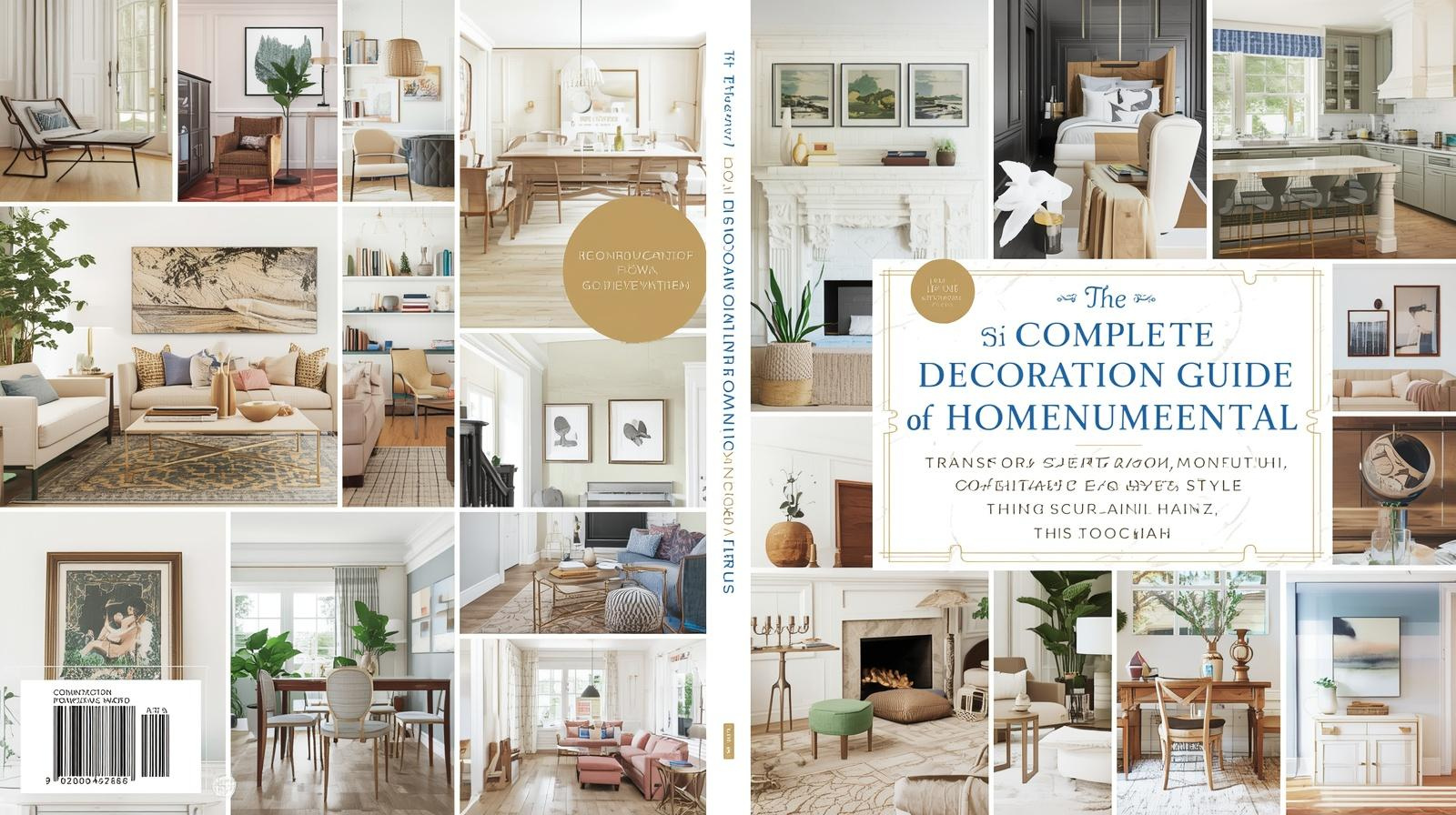

There is a particular kind of magic that happens when you walk into a beautifully decorated room. Something shifts. The noise of the day outside fades. You feel your shoulders drop, your breathing slow, your mind settle. You are, instinctively and immediately, at home. That feeling — effortless, enveloping, unmistakably right — is what great home decoration does at its very best. And it is not accidental. It is the result of deliberate, knowledgeable decisions made by someone who understands how spaces work on human beings.
At Homenumental, we have spent years studying what makes decorated spaces truly work — not just visually, but emotionally. We have observed the way certain colour combinations create a sense of warmth even in rooms with little natural light. We have watched how the placement of a single large mirror can transform a cramped hallway into something that feels genuinely spacious. We have seen how layering three different textures on a sofa — velvet, linen, and a knitted wool throw — turns a functional piece of furniture into the most inviting seat in the house.
This decoration guide brings together the full depth of that knowledge in a single, practical, beautifully organised resource. Whether you are decorating your first home, refreshing a space that has grown tired, preparing a property for sale, or simply trying to understand why the rooms you love feel the way they do, what follows will give you the understanding, the tools, and the confidence to create something genuinely extraordinary.
Part One — The Homenumental Philosophy of Decoration
What Decoration Really Is — and What It Is Not
Decoration is one of those words that people think they understand until they try to define it precisely. Most people use it as a synonym for making things look nice — buying things, arranging them, perhaps painting a wall or two. And while those activities are certainly part of decoration, they are not its essence. At its deepest level, decoration is the art of creating a specific feeling in a specific space for specific people. Everything else — the colours, the furniture, the accessories, the textiles, the lighting — is in service of that feeling.
This distinction matters enormously in practice. When you begin a decoration project by asking ‘What do I want this room to feel like?’ rather than What furniture shall I buy? every subsequent decision becomes clearer and more confident. You are no longer choosing between a blue sofa and a grey one — you are choosing which option better serves the feeling you have decided to create. You are no longer wondering whether to hang a mirror or a painting — you are asking which object more powerfully contributes to the atmosphere you have committed to building.
The Homenumental philosophy of decoration is built on three interconnected beliefs. First, that every person’s home should feel like a genuine expression of who they are — not a replica of a magazine spread or a showroom floor, but a space that tells the story of a specific life, lived in a specific way. Second, that beauty and function are not in tension — a beautifully decorated room is almost always also a highly functional one, because the clarity of thought that produces beauty naturally produces good practical decisions too. Third, that great decoration is within reach of every homeowner at every budget, because it is fundamentally a discipline of ideas, knowledge, and attention rather than expenditure.
Homenumental Core Belief: The rooms that people remember most are never the most expensive ones. They are the ones with the strongest sense of personality, the warmest atmosphere, and the clearest evidence of genuine care. These qualities are available to everyone.
Over years of working with homes of every size, style, and budget, the Homenumental team has identified six recurring qualities that distinguish genuinely beautiful decorated spaces from those that merely look assembled. We call these the Six Pillars, and they form the framework around which every decoration decision in this guide is organised.
Pillar 1: Intention
Every great room was designed with a clear intention — a specific feeling the designer was working toward. Rooms that lack intention feel directionless, as though the furniture and accessories arrived independently of each other and settled wherever space was available. Rooms with strong intention feel coherent, purposeful, and deeply satisfying. Before decorating any room, decide how you want it to feel. Write those words down. Let them become your editorial compass for every decision that follows.
Pillar 2: Cohesion
Cohesion is the quality of a room where every element appears to belong to the same family — where colours speak to each other, materials carry a consistent thread, and the overall mood is unified and harmonious. Cohesion does not mean uniformity. The most interesting, characterful decorated spaces contain enormous variety — in age of pieces, in origin, in style — but they are held together by a consistent palette, a unifying material, or a shared emotional register. Cohesion is what separates a curated space from a collection of purchases.
Pillar 3: Warmth
Warmth in decoration is not simply a matter of colour temperature — though warm colours certainly contribute to it. It is a quality produced by the combination of soft textures, natural materials, layers of ambient light, the presence of living things like plants and flowers, and objects that carry personal meaning or visible history. Cold rooms are often technically correct but emotionally absent. They can be beautiful in photographs and uncomfortable to inhabit. The Homenumental approach always prioritises warmth as the quality that transforms a room from impressive to genuinely inviting.
Pillar 4: Layering
The difference between a flat room and a rich one is almost always layering. Layering means building up a room’s visual and physical complexity through multiple overlapping elements: a rug over a floor, a throw over a sofa, a cushion over a throw, a plant beside a lamp, a book beneath a candle on a table, a framed print beside an unframed one on a wall. Each layer adds depth. Individually, none of these elements is extraordinary. Together, they create a room that rewards close attention and feels genuinely alive.
Pillar 5: Personality
Personality is what makes a room unmistakably yours rather than anyone else’s. It comes from the objects you display that carry personal history — the ceramic bought on a trip, the inherited lamp, the photograph taken on an important day. It comes from the choices that reflect genuine preference rather than trend-following. It comes from the willingness to include things that might not be conventionally ‘correct’ but that matter to you. Rooms without personality feel like hotel lobbies, regardless of how beautiful they are. Rooms with strong personality feel like places where real life is lived.
Pillar 6: Restraint
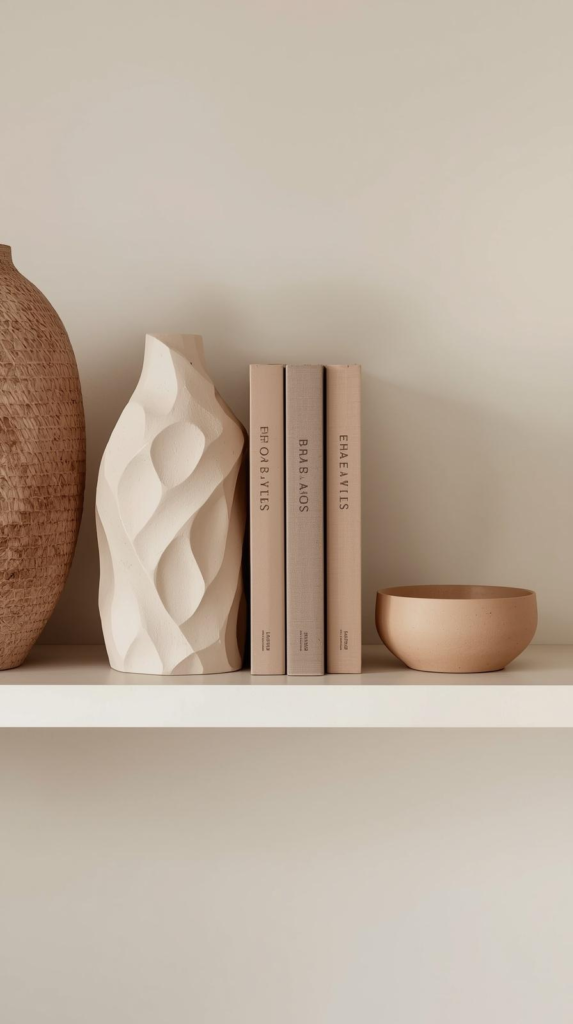
Restraint is perhaps the most counter-intuitive of the 6 pillars, because decoration is conventionally associated with adding things rather than removing them. But experienced decorators know that the most powerful interventions are often subtractive. Removing three accessories from a shelf makes the remaining two more beautiful and more noticed. Leaving one wall entirely bare in a room makes the decorated walls more impactful. Choosing a sofa without pattern allows the patterned cushions to sing. Restraint is not austerity — it is the disciplined editing that allows each chosen element to breathe and be seen.
Homenumental Tip: Before buying anything new for a room, spend one week editing what is already there. Remove everything that does not serve the room’s intended feeling and store it out of sight. In most cases, this editing process reveals a genuinely good room that was simply obscured by too many things.
Part Two — Colour, Material & Light
Colour in Decoration: The Language of Mood and Atmosphere
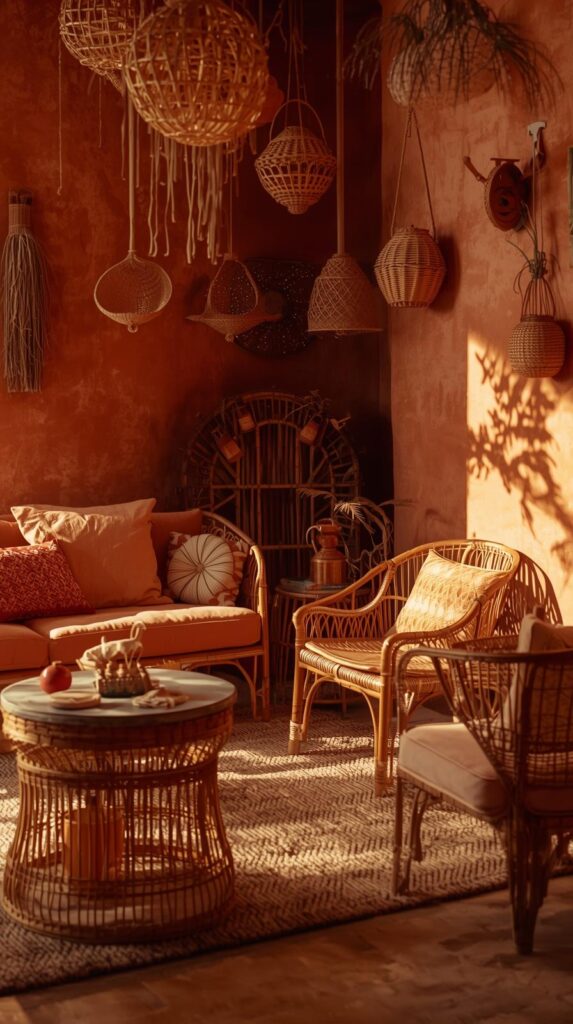
Colour is the most emotionally direct tool in the decorator’s entire repertoire. Before we have processed the shape of a room or the quality of its furniture, we have already registered its colour and felt its effect on our nervous system. Warm colours — the rich burnt oranges, deep terracottas, amber yellows, and dusty pinks that are central to the Homenumental palette — generate a physical sensation of warmth, safety, and intimacy. Cool colours — the pale blues, soft greys, sage greens, and chalky whites — create spaciousness, calm, and a quality of restful clarity.
Understanding this emotional vocabulary allows you to make colour choices that genuinely serve the purpose of each room rather than simply following fashion. A bedroom that you want to feel like a sanctuary benefits from the cool, restful quality of sage green or soft lavender. A living room that you want to feel like the warmest, most welcoming place in the house benefits from the enveloping quality of a deep terracotta, a rich ochre, or a warm earthy brown. A kitchen that you want to feel bright, energetic, and sociable benefits from the crisp clarity of white or cream with warm accents in spice tones.
The Homenumental approach to colour schemes is built around the concept of a palette rather than a single colour. Every room benefits from a family of colours that work together — a dominant tone that establishes the room’s overall character, a secondary tone that adds depth and interest, and one or two accent colours that provide energy and surprise. The 60-30-10 principle — sixty percent dominant, thirty percent secondary, ten percent accent — provides a reliable structural framework, but the most important thing is that the colours you choose feel genuinely right for the space and the people inhabiting it.
Homenumental Colour Palette 2025: Signature tones: warm terracotta, aged ochre, dusty rose, deep forest green, chalky off-white, burnished brass, and natural linen. These colours work together in endless combinations and consistently create spaces that feel warm, grounded, and richly beautiful.
Materials and Texture: Building Rooms That Feel as Good as They Look
If colour is the language of decoration, texture is its tone of voice. The same colour palette delivered through different materials produces entirely different emotional results. A room decorated in terracotta and cream with smooth plaster walls, polished stone floors, and silk cushions will feel cool, precise, and slightly formal. The same palette expressed through rough limewash walls, worn timber floors, linen cushions, and a jute rug will feel warm, organic, deeply comfortable, and full of character. The colours are identical. The experience is completely different.
At Homenumental, we work across three categories of material that together create the kind of rich, multi-dimensional texture that makes a room feel genuinely luxurious regardless of budget. Natural materials — timber, stone, terracotta, linen, cotton, jute, rattan, leather, and living plants — provide the organic warmth and authentic character that no synthetic material can replicate. They age beautifully, carry patina and history, and connect us instinctively to the natural world in ways that support psychological wellbeing. Soft materials — velvet, chenille, wool, fleece, and knitted textiles — absorb light rather than reflecting it, and create the sense of physical warmth and comfort that is fundamental to a truly liveable home. Hard materials — marble, ceramic, glass, polished metal, and lacquered surfaces — provide counterbalance through their reflectivity and precision, and give a room the visual clarity it needs to prevent softness from becoming shapelessness.
The practical rule Homenumental applies to every room is what we call the texture count: before completing any decoration scheme, count the number of distinct textures present. If the count is fewer than five, the room will almost certainly feel flat and slightly dull, regardless of the quality of its individual pieces. Adding a jute rug, a linen throw, a terracotta bowl, a timber side table, and a trailing plant — at a combined cost that rarely exceeds $80–$120 — can transform the atmosphere of a room that was technically correct but emotionally unconvincing.
Homenumental Tip: The fastest, most affordable way to add rich texture to any room is through cushion covers. Choose three or four covers in different fabrics — velvet, linen, and a textured weave — in coordinating colours from your room’s palette. Replace them seasonally to keep the room feeling fresh and alive throughout the year.
Light: The Element That Completes Every Decoration Scheme
Decoration without a considered lighting scheme is like a painting without varnish — technically present but somehow unfinished, missing the quality that would allow all the other elements to show themselves at their absolute best. Lighting is the element that completes decoration, and it is consistently the most transformative change available to any homeowner, at any budget, in any room.
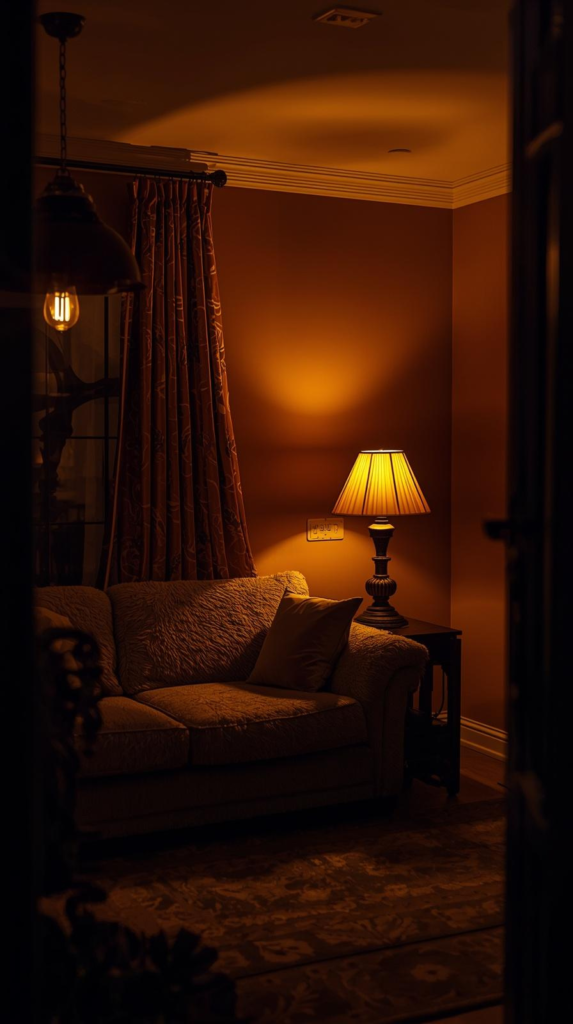
The fundamental shift that Homenumental recommends in every home is the move from single-source ceiling lighting to layered, multi-source light. A room lit by a single overhead fixture — even a beautiful one — is a room in which the same quality of light falls on every surface at every time of day. It is flat, institutional, and emotionally inert. A room lit by a combination of ambient ceiling light, task lighting at specific functional points, and accent lighting from table lamps, floor lamps, and other smaller decorative sources is a room that feels warm, textured, dimensional, and entirely different after dark from how it appears in daylight.
Beyond the structure of layered lighting, the quality of the light itself matters enormously. LED bulbs are now available across a spectrum of colour temperatures, measured in Kelvin. Bulbs below 2,700K produce a very warm, amber light similar to traditional incandescent bulbs and are ideal for living rooms, bedrooms, and dining rooms where atmosphere is the priority. Bulbs between 2,700K and 3,000K produce a slightly crisper warm white that works well in kitchens and home offices. Bulbs above 3,000K produce progressively cooler, bluer light that is better suited to task-specific spaces like bathrooms and studios. Choosing the right colour temperature for each room is a small decision with an enormous impact on how the decoration scheme reads in real life.
Homenumental Lighting Formula: Every room: 1 ambient source (ceiling, on a dimmer) + 2 accent sources (table lamps or floor lamps) + 1 task source where needed = a room that works beautifully at every time of day and every level of activity.
Part Three — Room-by-Room Decoration Guide
GUIDE 1: THE ENTRANCE HALL — Your home’s first impression and its emotional overture
The entrance hall is the room that sets the tone for everything that follows, and yet it is the space that receives the least decorative attention in most homes. This is a significant missed opportunity, because the entrance hall is the first thing guests experience and the last thing you see before you leave and the first thing that greets you when you return. Getting it right has a disproportionate impact on how the whole home feels.
- Make a statement with colour: The entrance hall is one of the best places in the house for a bolder, more distinctive colour choice. Because you pass through rather than inhabit it, a deeper or more dramatic colour creates impact without becoming oppressive.
- Invest in one quality piece of furniture: A beautifully chosen console table, a vintage chest, or an interesting bench immediately elevates the entrance from functional transit space to designed room.
- Control clutter rigorously: Hooks, a lidded basket for shoes, a tray for keys, and a home for bags eliminate the visual chaos that makes so many hallways feel unwelcoming.
- Create height interest: A tall mirror, a floor lamp, or an arrangement of prints stacked high draw the eye upward and make narrow hallways feel more spacious.
- Scent matters here: The smell of a home is part of its decoration. A quality candle or diffuser in the entrance creates an immediate sensory welcome before a single visual element is registered.
GUIDE 2: THE LIVING ROOM — The home’s social and emotional heart
The living room carries more decorative weight than any other space in the home. It is where guests are received, where family gathers, where rest is sought and found, where celebration and consolation both take place. It must work for television viewing and for intimate conversation, for a single person reading quietly and for a group of eight celebrating together. The decorative challenge of the living room is to create a space of genuine warmth and beauty that also serves this extraordinary range of purposes.
- Commit to a rug that is large enough: The single most common decorative mistake in living rooms is a rug that is too small. A rug that does not connect the furniture grouping makes everything look unanchored and the room feel unresolved. All primary seating pieces should have at least their front legs on the rug.
- Layer your seating: A living room with only a sofa is functionally limited and visually monotonous. Add an armchair, a pouffe, a window seat if space allows, or a pair of dining chairs that can be pulled in when needed. Variety of seating creates visual rhythm and allows the room to serve different configurations.
- Build a gallery wall with intention: A collection of frames in a consistent finish — all black, all natural timber, all white — arranged around a central anchor piece creates visual coherence from diverse content. Mix sizes, mix photographs with prints, mix flat frames with three-dimensional objects for depth.
- Address the corners: Undecorated corners make rooms feel unfinished. A tall floor lamp, a large plant, a sculptural object on a plinth, or a stacked pile of oversized books all give corners purpose and visual weight.
- Choose textiles that invite touch: Every textile in a living room — sofa upholstery, cushion covers, throws, rugs — should feel as good as it looks. Rooms where the textiles invite touch feel more generous and more welcoming than those that privilege appearance over physical experience.
GUIDE 3: THE BEDROOM — A sanctuary of rest, beauty, and personal expression
The bedroom is the most intimate room in any home — the space where you begin and end every day, where you are most completely yourself, and where the quality of your environment has the most direct impact on your physical and mental health. Bedroom decoration should prioritise two qualities above all others: the capacity to support deep, restorative sleep, and the ability to make the person inhabiting it feel genuinely seen, held, and at peace.
- Make the bed the room’s unambiguous focal point: The wall behind the headboard should be treated as the room’s most important decorative surface. Emphasise it through wallpaper, a carefully chosen paint colour that differs from the other walls, a large piece of calm artwork, or an upholstered headboard of significant height.
- Invest in your bedlinen above almost everything else: More than any piece of bedroom furniture, the quality of the bedlinen defines how a bedroom feels and how restful it is to inhabit. Natural fibres — linen, cotton percale, or a linen-cotton mix — breathe, soften with washing, and develop the kind of beautiful relaxed quality that synthetic alternatives can never match.
- Eliminate visual sources of stimulation: Screens, work-related objects, exercise equipment, and cluttered surfaces all signal activity and wakefulness to the brain. A bedroom that is visually quiet, uncluttered, and devoted exclusively to rest supports the physiology of sleep in ways that have been well documented by sleep researchers.
- Introduce softness at multiple levels: A rug beside the bed that your feet touch first thing in the morning, a textured throw at the foot of the bed, heavy curtains that fall generously to the floor, a soft lampshade that creates a warm diffused glow — softness at multiple points in the room creates a physical experience of comfort that transcends aesthetics.
- Let your bedroom reflect you specifically: The bedroom is the one room in the house where you need please no one but yourself. Fill it with the things that genuinely matter to you — the books you love, the scent that relaxes you, the art that moves you, the objects that carry meaning. A bedroom that reflects its occupant’s genuine self is always more beautiful than one that reflects a trend.
GUIDE 4: THE KITCHEN AND DINING SPACE — Where nourishment, gathering, and daily life converge
The kitchen is the most functionally complex room in any home, and the one where the tension between beauty and practicality is most acutely felt. The Homenumental approach resolves this tension by insisting that function and beauty are not adversaries — that a kitchen designed to work exceptionally well will almost inevitably also look exceptionally good, because clarity of purpose produces clarity of form.
- Treat your kitchen surfaces as decorative elements: The worktop, the splashback, and the cabinet fronts collectively constitute the kitchen’s decorative character. A beautiful worktop material — warm timber, aged stone, or textured concrete — immediately elevates a kitchen beyond its functional elements.
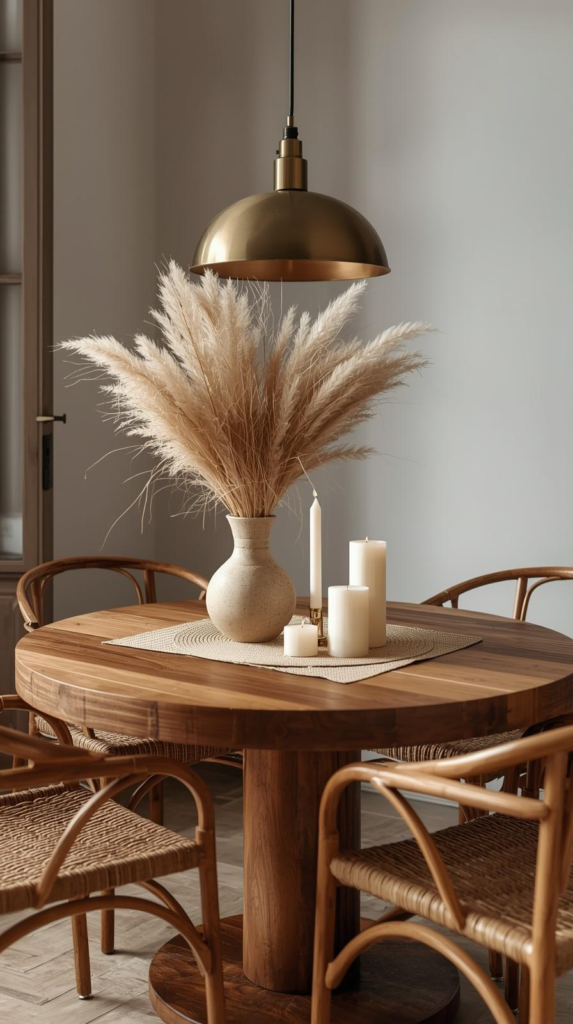
- Bring warmth to the dining table: The dining table is one of the most important decorative surfaces in any home, and it deserves sustained attention. A collection of candles at different heights, a simple ceramic bowl of seasonal fruit, a small vase of fresh or dried flowers, and carefully chosen placemats transform a functional surface into a beautiful one at very low cost.
- Display what you use with beauty in mind: Open shelving in a kitchen invites decoration as well as storage. A row of matching glass jars for dry goods, a stack of beautiful ceramics, a cluster of copper or cast iron pans — the objects of cooking, displayed with intention, become part of the room’s decoration.
- Invest in one extraordinary light above the dining table: The pendant or chandelier above a dining table is that room’s single most important decorative statement. It does not need to be expensive — it needs to be right in scale, tone, and character.
Part Four — Seasonal Decoration and the Living Home
Seasonal Decoration: How to Keep Your Home Feeling Alive All Year
One of the qualities that distinguishes truly beautiful homes from merely well-decorated ones is the sense that they are alive — that they change with the seasons, respond to the rhythms of the year, and reflect the ongoing life of the people within them rather than remaining frozen in a single moment of decoration. Seasonal decoration does not require wholesale redecorating four times a year. It requires a series of small, considered changes that shift the emotional character of a space in response to the light, the temperature, and the mood of each season.
Spring and Summer
As natural light returns and temperatures rise, the home naturally wants to feel lighter, more open, and more connected to the outside world. This is the season to remove heavier throws and replace them with lighter linen alternatives, to introduce fresh flowers and growing plants, to swap deep-toned cushion covers for lighter versions in soft sage, pale yellow, or fresh white, and to draw back curtains more fully to allow maximum light to fill the rooms. Scent shifts too — from the warm spice and amber of winter candles to the fresh green and floral notes of summer.
Autumn and Winter
As the light contracts and the temperature drops, the home wants to feel warmer, denser, more enveloping. This is the season of layering — adding a second throw to the sofa, bringing out the heavier wool cushion covers, lighting candles in the afternoon, filling bowls with seasonal produce. Warm amber and terracotta tones come forward in the decoration scheme, natural textures like wicker, dried botanicals, and burnished metals take on greater importance, and the emphasis shifts from the crisp visual qualities of summer to the deeply physical comfort that the season demands.
✦ Homenumental Tip: Build a seasonal decoration box for each season. When you make your spring changes, pack the winter throws and accessories into the box and store it. Six months later, unpacking it feels like discovering beautiful things for the first time — and the familiar pieces feel fresh and welcome again.
| Room | Homenumental Priority | One Change — Maximum Impact |
| Entrance Hall | First impression & atmosphere | One quality piece of furniture + controlled clutter |
| Living Room | Warmth, layering, and gathering | Correctly sized rug anchoring all seating |
| Bedroom | Rest, intimacy, and personal sanctuary | Beautiful linen bedding in a natural fibre |
| Kitchen | Function expressed as beauty | One dramatic pendant above the dining table |
| Bathroom | Clean serenity and sensory pleasure | Thick quality towels + one living plant |
| Home Office | Focus, energy, and inspiration | Natural light prioritised + inspiring artwork |
| Children’s Room | Imagination, comfort, and flexibility | Low-level storage + one bold colour zone |
| Garden / Terrace | Extended living space outdoors | Outdoor rug + weather-proof soft seating |
High-Impact Decoration Changes at Every Budget Level
Great decoration is not a function of budget — it is a function of knowledge, judgement, and care. Here is the Homenumental guide to maximum decorative impact at every spending level.
| Budget | What to Do | Expected Impact |
| Free | Edit and declutter all surfaces; rearrange existing furniture; rehang artwork at correct eye level | Often the single most dramatic change available in any home |
| Under $30 | New cushion covers in quality fabric; a living plant; a bunch of fresh or dried flowers | Adds texture, warmth, and life to any room immediately |
| Under $80 | A new rug; a set of matching frames; quality pillar candles and ceramic holders | Anchors furniture, unifies walls, creates evening atmosphere |
| Under $150 | A table lamp or floor lamp; new bedlinen; a large mirror in a statement frame | Transforms lighting quality, sleep environment, and spatial perception |
| Under $300 | A quality statement pendant; a vintage or secondhand focal piece; new curtains correctly hung | Elevates the room’s design level significantly — feels like a full redecoration |
| Under $600 | A sofa reupholster; a large-format artwork; a significant plant in a quality pot | Changes the room’s fundamental character and becomes the story of the space |
A: Homenumental’s decoration style is best described as warm, layered, and characterful. We are drawn to spaces that feel abundant without being cluttered, that carry the warmth of natural materials and earthy colour palettes, and that have a strong sense of personal personality — rooms that tell a story about the people who inhabit them. Our signature palette centres on terracotta, aged ochre, warm off-whites, deep forest greens, and natural linen, expressed through organic textures, vintage and contemporary pieces mixed with confidence, and layered lighting that makes every room feel beautiful after dark.
Q: Where should I begin if I want to redecorate a room from scratch?
A: Begin with feeling, not furniture. Before you look at a single product, decide how you want the room to feel. Write down three to five words — calm, warm, layered, intimate, energetic, serene — and let those words become your brief. Then assess what is already in the room and decide what genuinely serves that feeling and what does not. Edit first. Then identify the two or three key pieces that will anchor the room — usually the primary seating, the rug, and the lighting. Build everything else around those anchors.
Q: How do I make a small room look and feel bigger?
A: Several well-established techniques reliably increase the perceived size of a small room. Use a consistent light colour on walls and ceiling — this removes the visual boundary between the two surfaces and creates height. Hang curtains as close to the ceiling as possible and extend them well beyond the window frame on both sides — this makes windows appear significantly larger and the ceiling higher. Use mirrors strategically to reflect light and create depth. Choose furniture with visible legs rather than plinth bases — legs create visual space beneath furniture and make a room feel lighter. Maintain disciplined storage so that surfaces are clear — clutter is the primary cause of small rooms feeling cramped.
Q: Is it better to invest in a few quality pieces or spread my budget across many items?
A: The consistent Homenumental answer is fewer, better. A room furnished with three or four genuinely well-chosen, quality pieces feels more resolved, more beautiful, and more personally satisfying than one filled with a much larger number of adequate but undistinguished objects. The pieces that receive the most physical contact and visual attention — the sofa, the bed, the rug, the primary light fitting — deserve the greatest proportion of your budget. The pieces that provide decorative support and seasonal variation can be found at lower price points without compromising the room’s overall quality.
Q: How do I know when a room is finished?
A: A room is finished when removing anything from it would make it feel lesser. This is a useful practical test: stand in the doorway and identify one element you could remove. If the room would feel better without it, remove it. If it would feel diminished, the room is right. Most rooms benefit from one final editing pass after the decoration work is apparently complete — a pass in which you look with fresh eyes for anything that is not fully earning its place. The courage to remove things — even beautiful things that you like individually — is what separates genuinely decorated rooms from assembled ones.
Create a Home That Holds You — and Shows the World Who You Are
Decoration, at its most fundamental, is an act of care. It is the expression, through the physical arrangement of colour, material, light, and object, of the care you have for the people who inhabit a space — including yourself. Every considered choice, every edited surface, every well-placed lamp and thoughtfully chosen textile is a small declaration that this place matters, that the people here matter, and that the quality of the daily environment in which life is lived is worthy of sustained attention and genuine creative investment.
The principles and practices in this guide are not a formula for a particular look. They are tools for thinking more clearly and feeling more confidently about the spaces you inhabit. Use them to understand what draws you to the rooms you love and to replicate those qualities in your own home. Use them to make more intentional decisions and fewer regretted purchases. Use them to create spaces that serve your actual life — with its particular rhythms, its specific people, its individual aesthetic — rather than a generic aspirational version of it.
Your home is not a project to complete. It is a living expression of who you are and who you are becoming. The most beautiful homes are never finished — they evolve, they deepen, they accumulate meaning. Give yours the attention and the knowledge it deserves. And know that the effort — every carefully considered decision, every courageous editing choice, every layer added with intention — is always, always worth it.